
WithMe
A Friendship-Focused Social Metaverse for Gen-Z
Founding Product Designer
0→1 platform
PD: 2
PM: 2
Eng: 20
Partners: Game Design, Art, QA
iOS
Android
2021-2023
Background
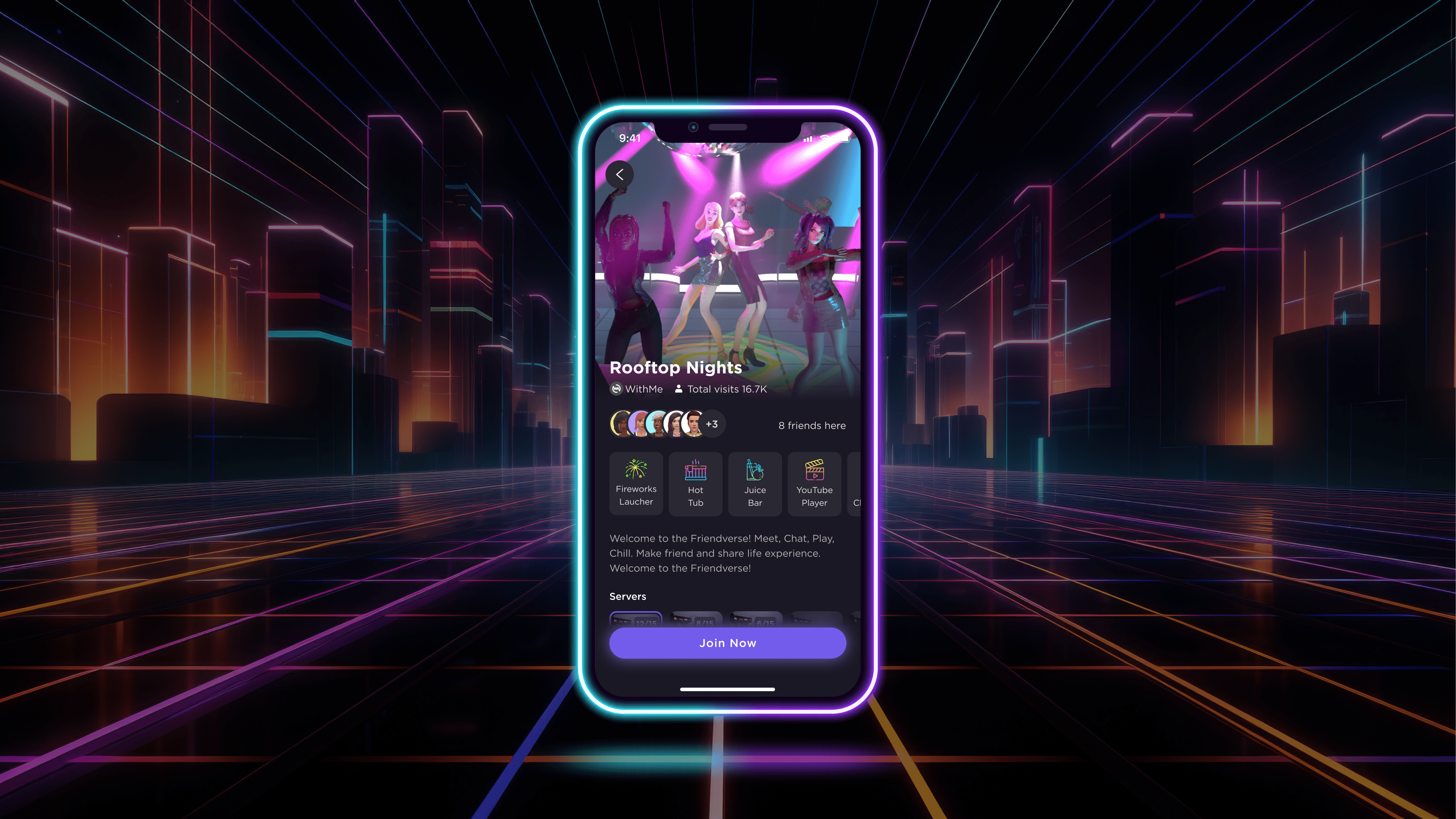
At Together Labs (the team behind IMVU), we launched WithMe—a new 3D mobile social platform built in Unreal Engine 5—and as the founding designer, I shaped the product experience end-to-end to deliver interconnected, real-time interactions with modern avatars beyond IMVU’s chat-centric worlds.
The Problem
The project was born out of a perceived gap in the social media and gaming landscape, especially for Gen-Z teens.
Loneliness is on the rise: Even before the pandemic, studies showed an increase in loneliness, particularly among teens.
"Social" media isn't truly social: Platforms like Instagram and TikTok are often about passive scrolling and media consumption, not active, shared experiences with friends.
Games lack meaningful social components: While many games are adding social features, they are often an afterthought rather than a core focus.
Existing platforms feel flat: Current tools like DMs, email, and Zoom feel distant and lack the "spatial socializing" that is psychologically important for connection.

Design Challenge
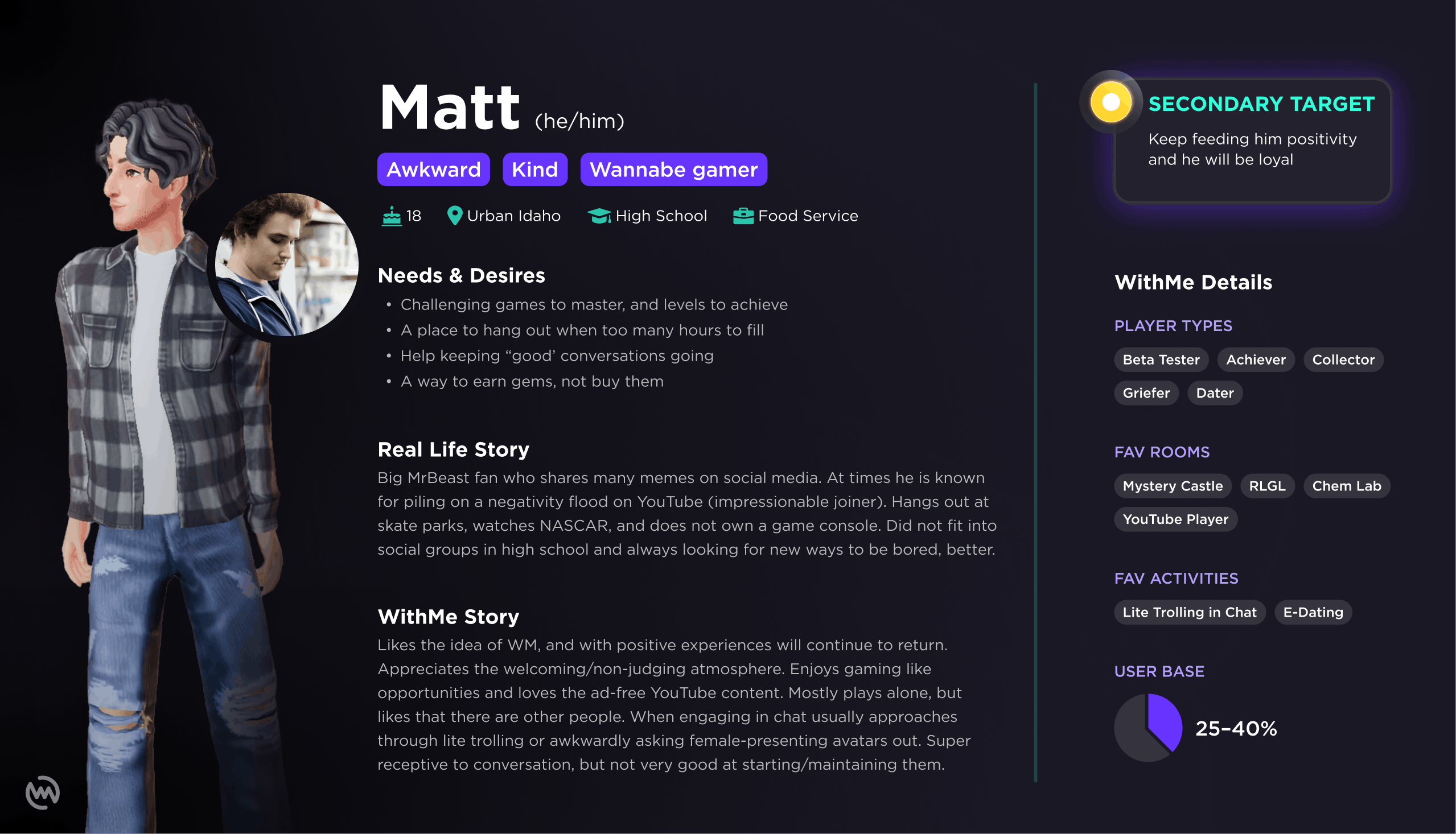
How might we create a safe, welcoming, and active space that reliably turns strangers into friends?
Design Principles
WithMe is built from the ground up on the real ways friendships form, and there is a science to it. As we developed the platform, we worked closely with leading experts and academics focused on the science of friendship and healthy relationships.
1
Shared experiences → Bonding
Co‑play (escape rooms, trivia, drawing, watch parties) sparks disclosure and inside jokes.
2
Positivity → Return
Reward prosocial behavior (kudos, reputation), celebrate micro‑wins, reduce negativity exposure.
3
Consistency → Belonging
Lower re‑entry friction, surface “where my friends are,” keep small groups together across rooms.
4
Self‑expression → Presence
Lifelike avatars, fast customization, and fashion drive identity and recognition loops.
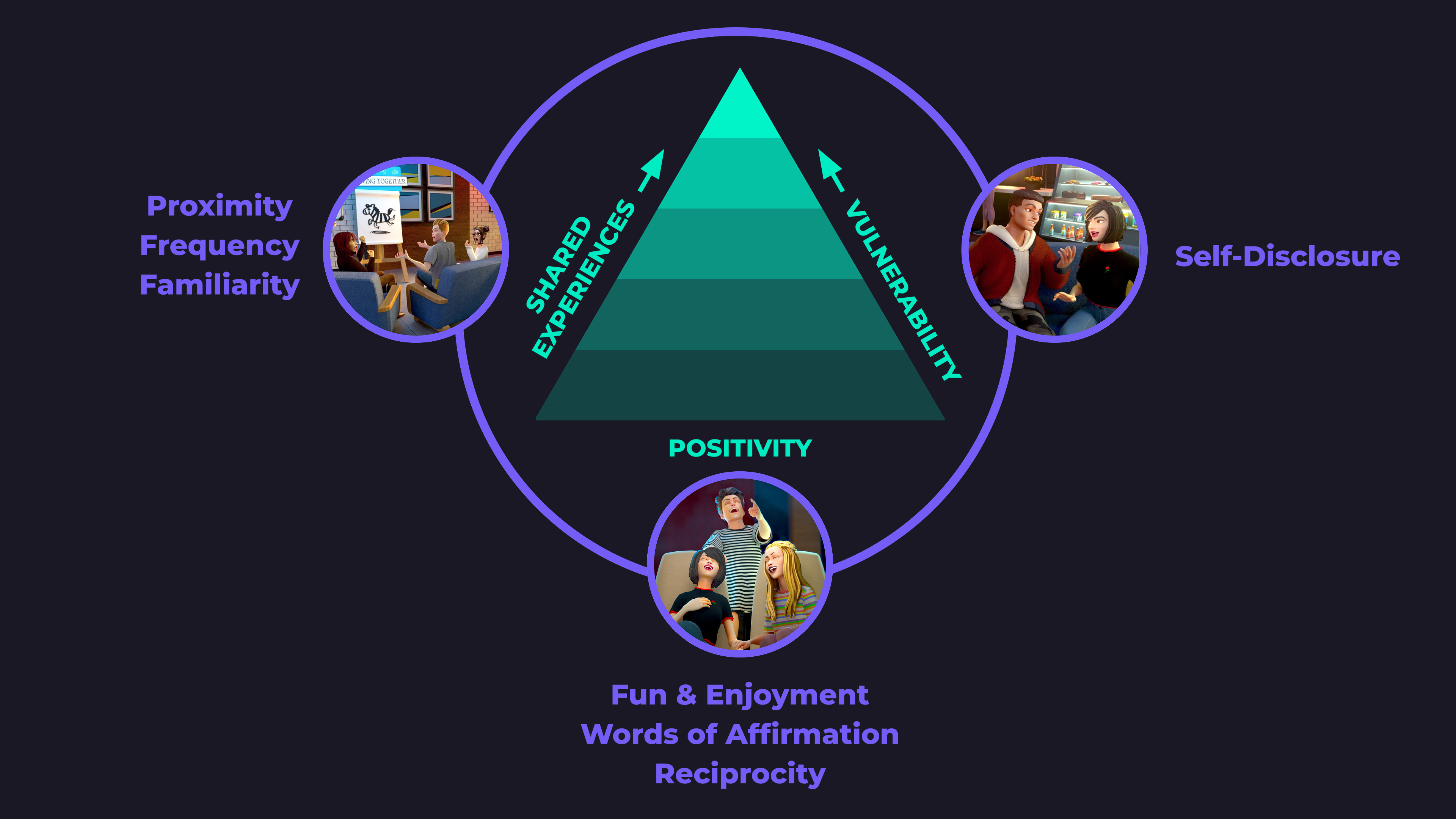
Based on Shasta Nelson’s Frientimacy Model.


Destinations
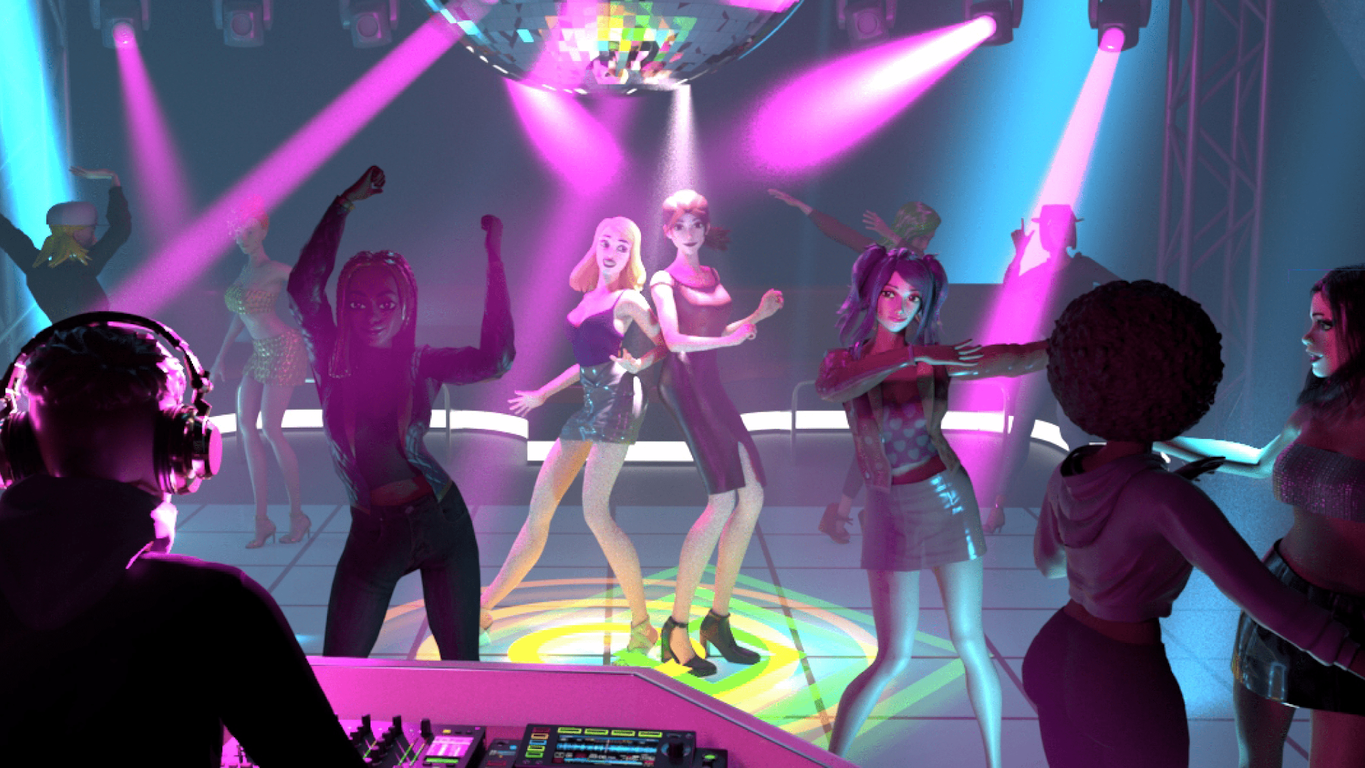
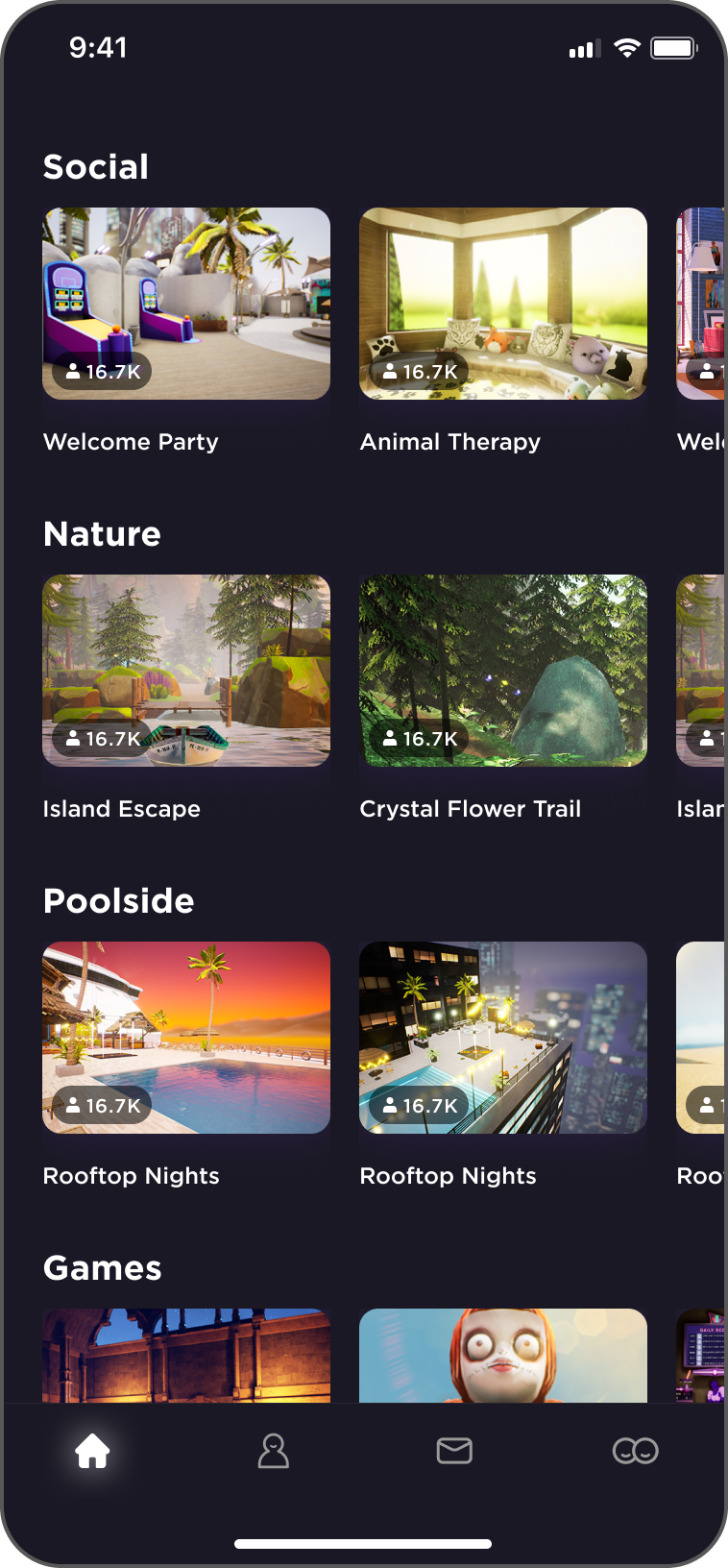
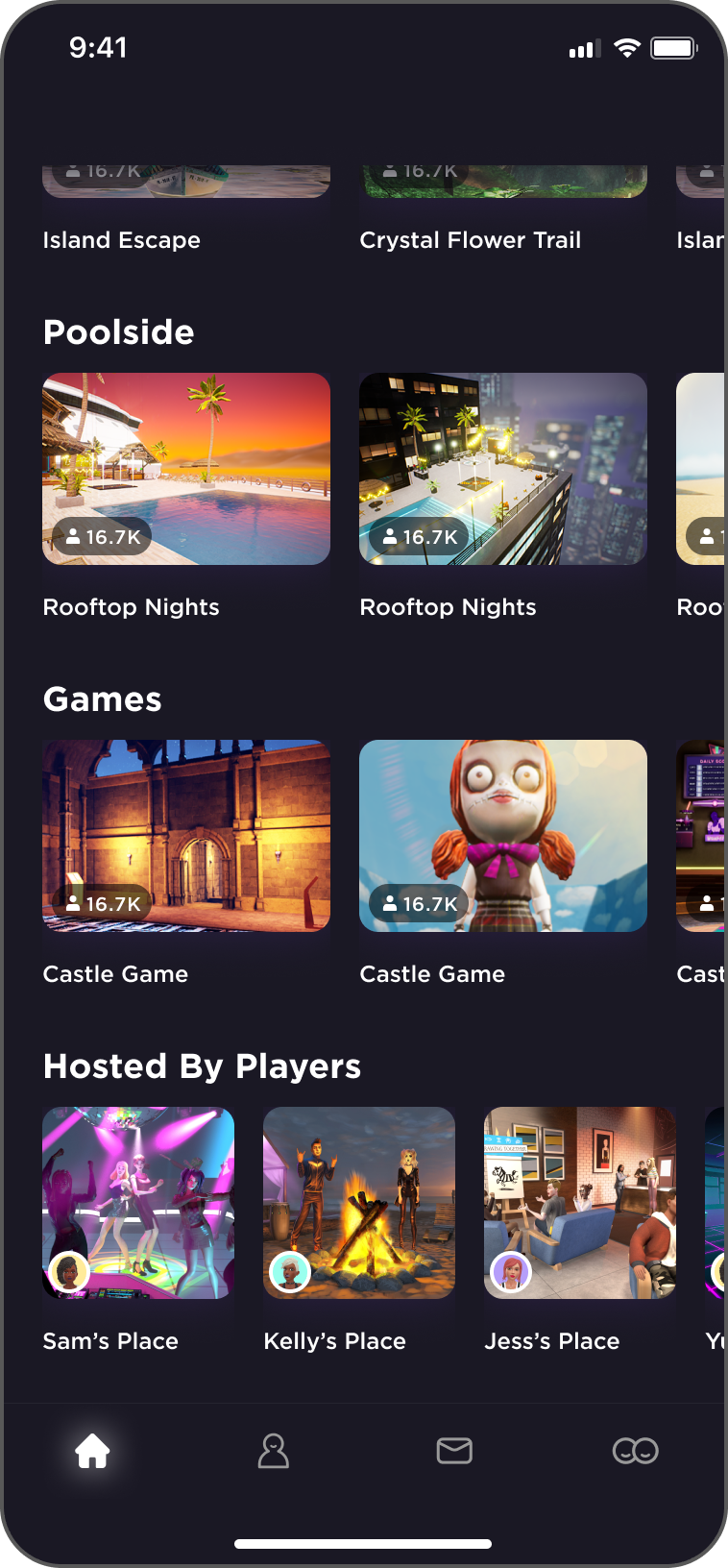
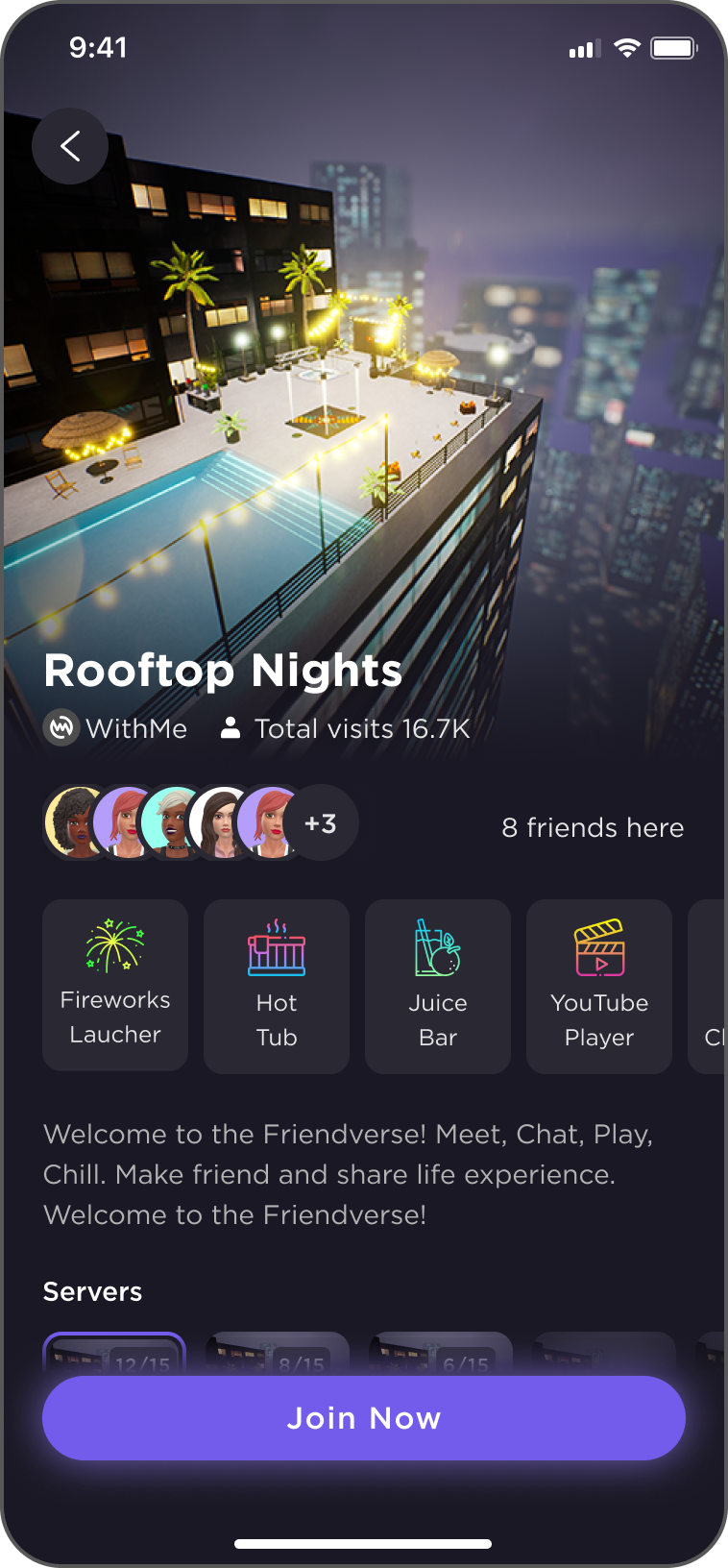
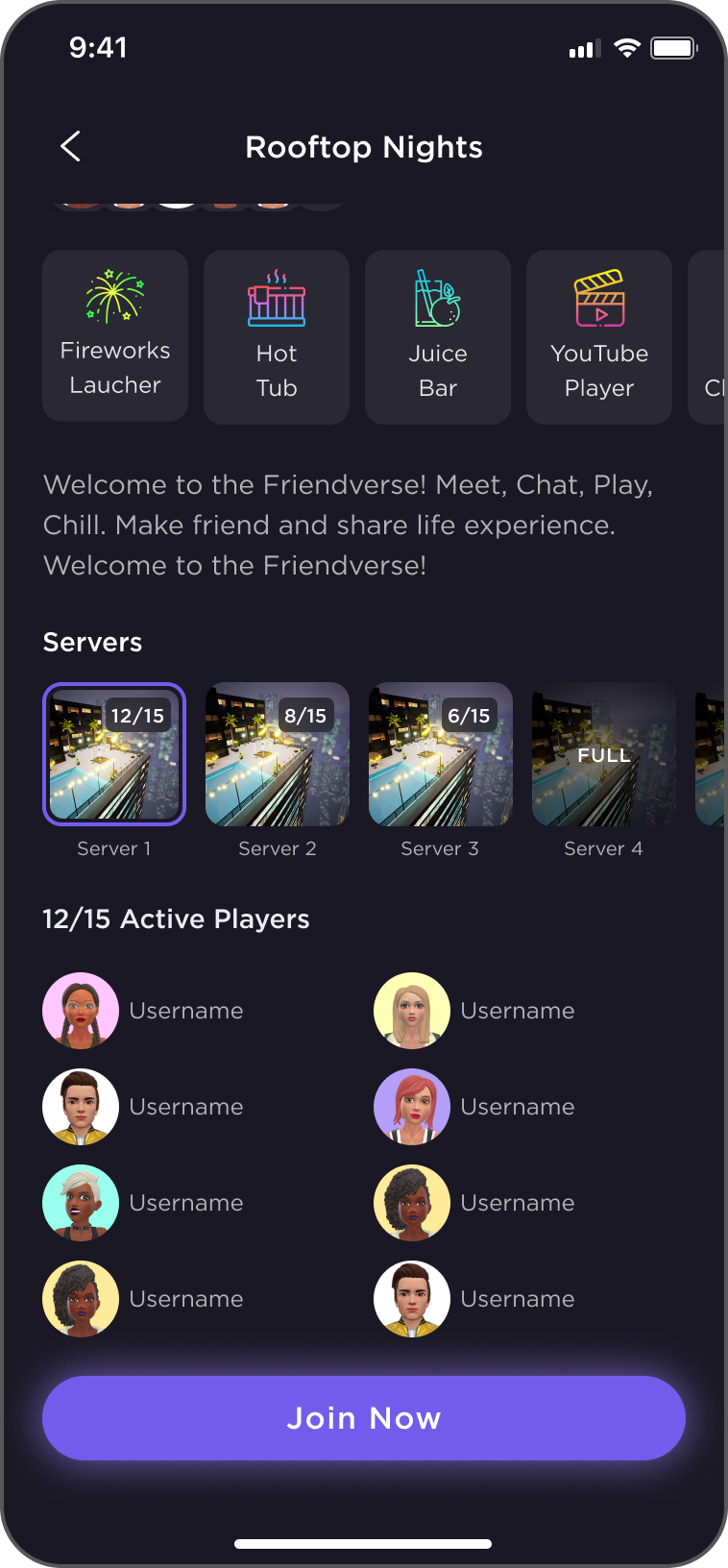
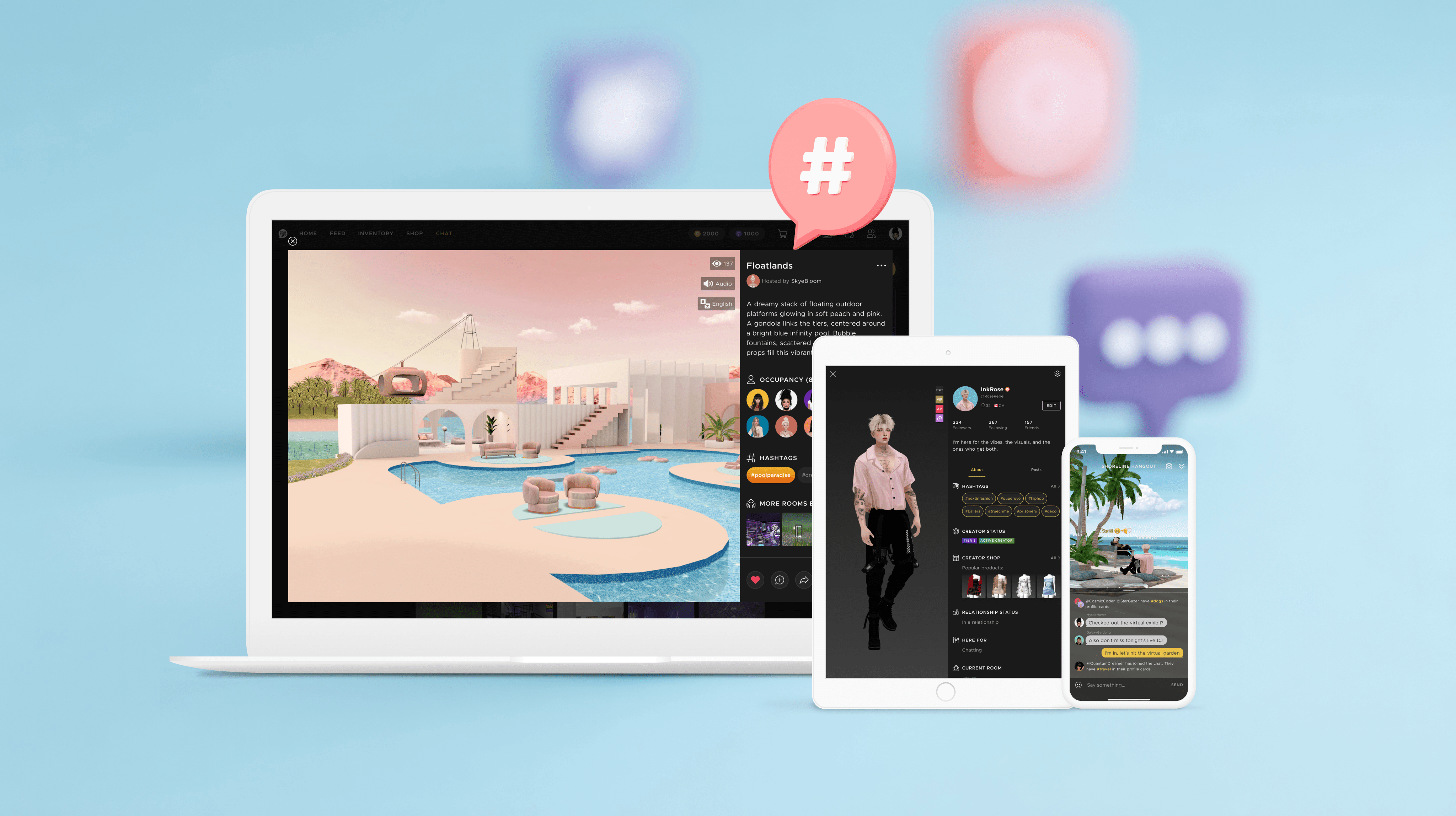
Discovery is the product’s first promise: show me where my people are and why I should join now. Each room card answers that at a glance—friends already inside, what you can do (activity chips), who’s hosting, and what’s playing. Themed swimlanes group rooms by vibe, and one-tap join removes friction. A dark theme of purple (trust/identity) and teal (fresh energy) keeps it legible and on-brand.
Watch YouTube
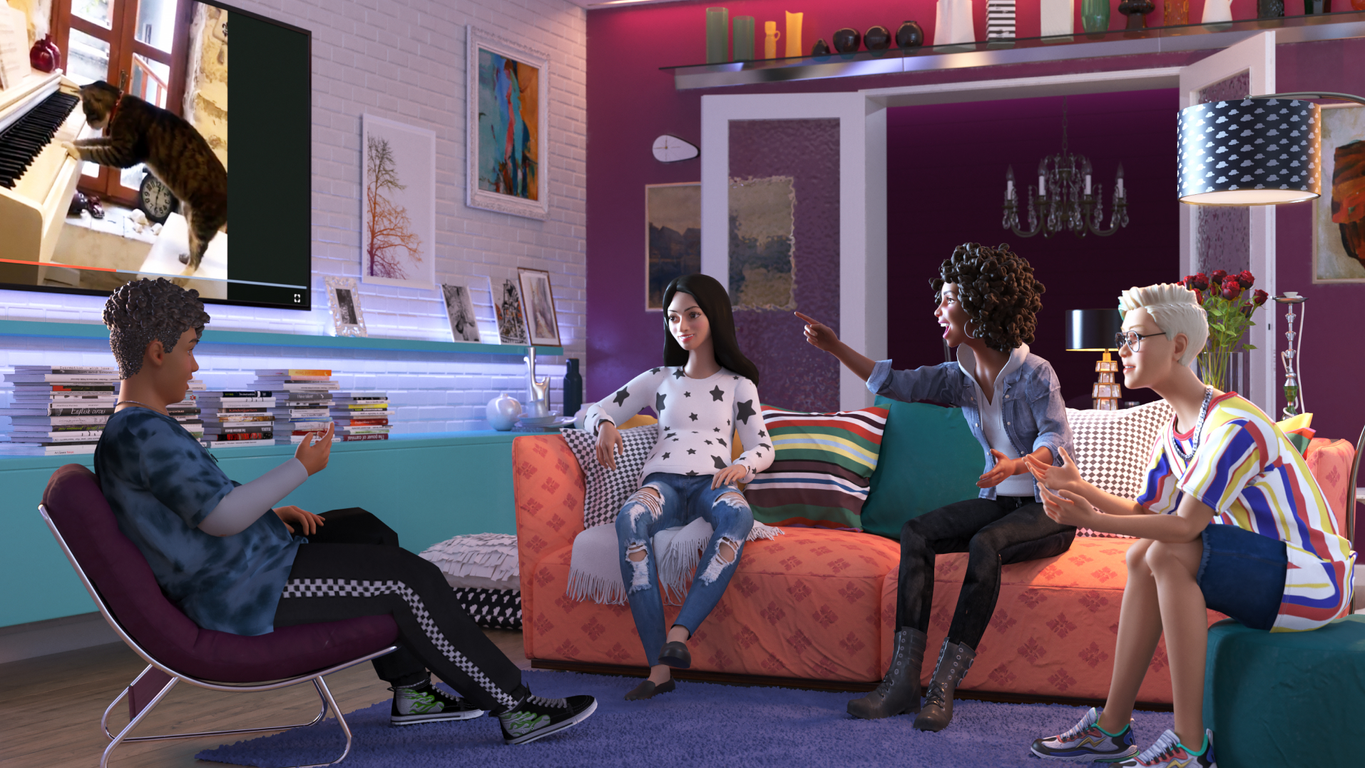
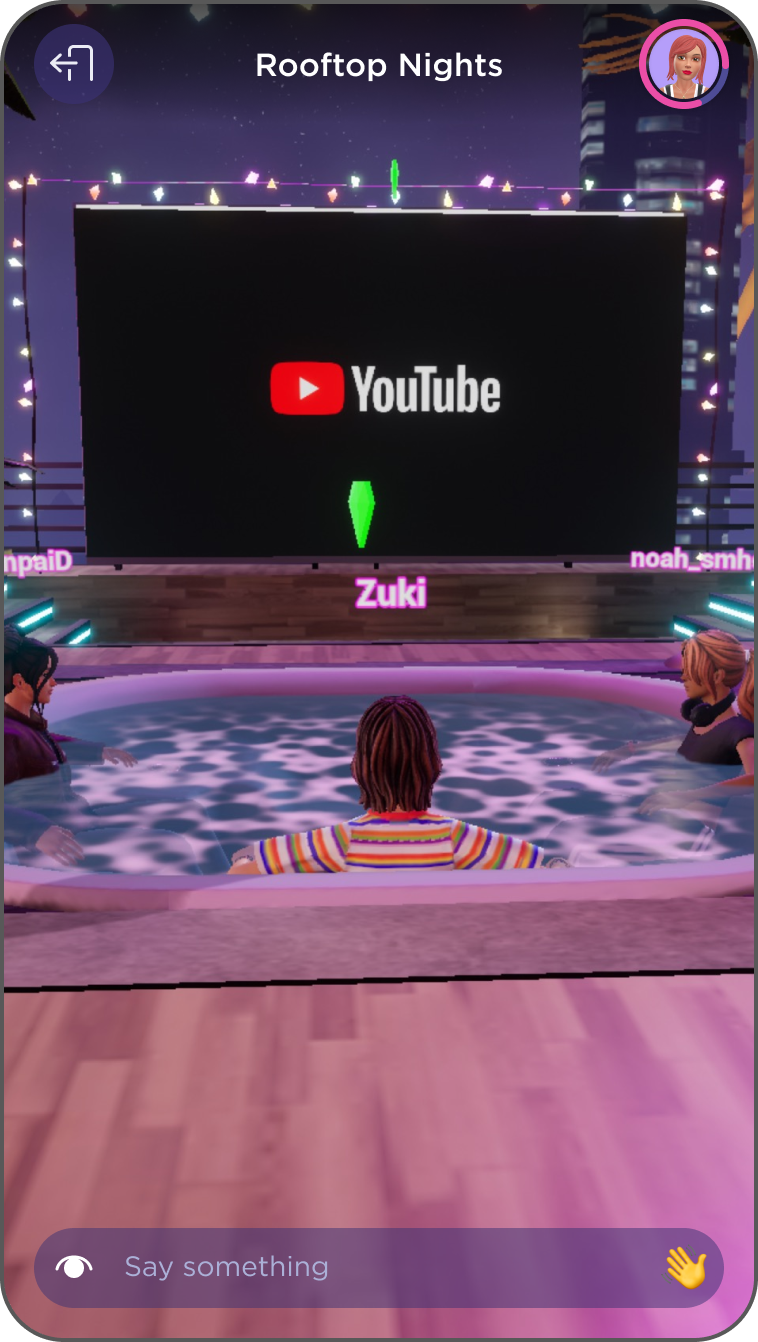
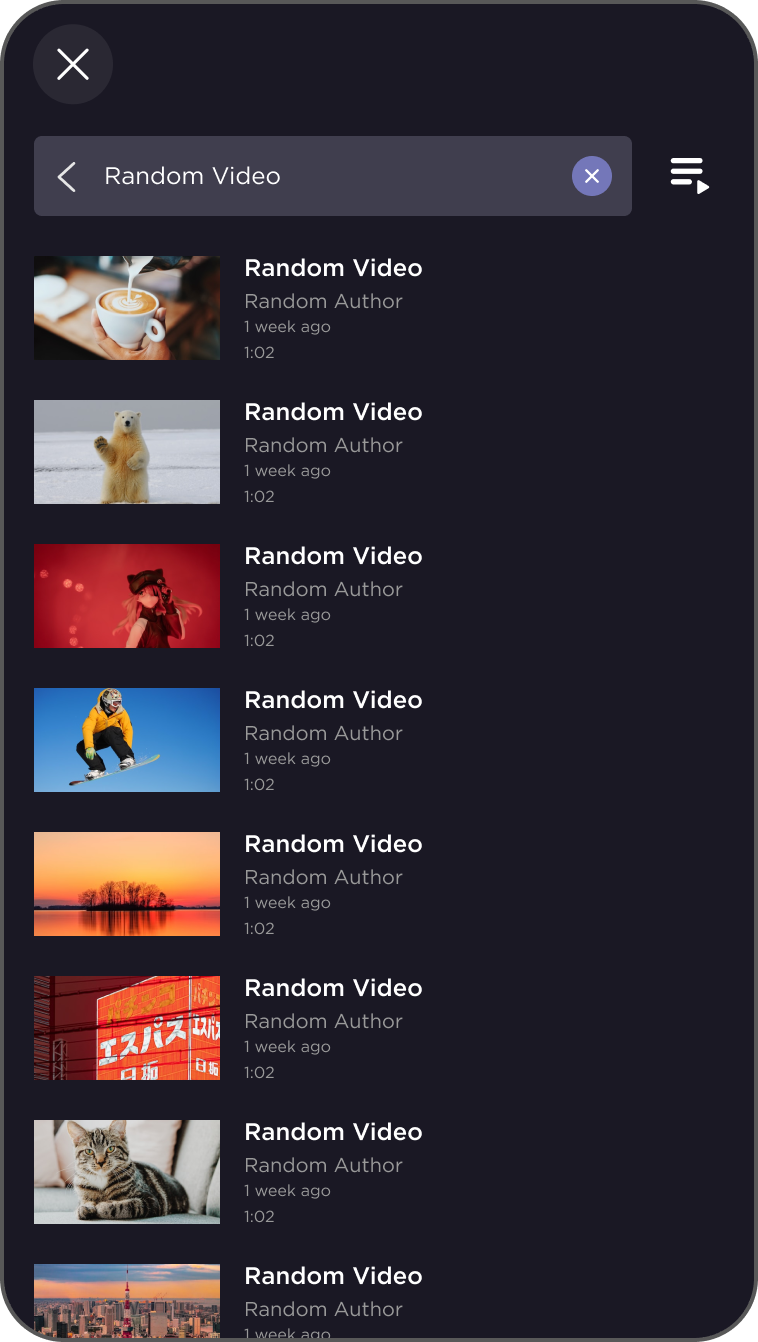
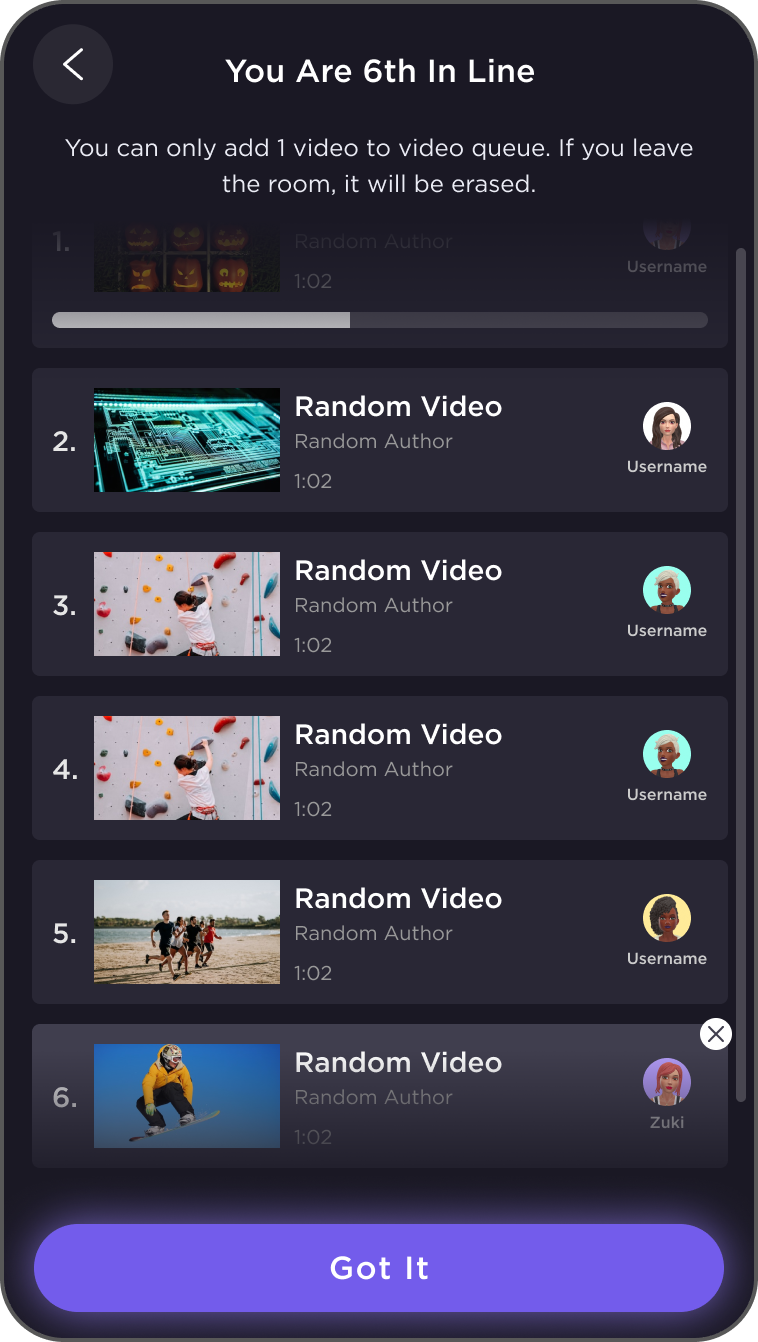
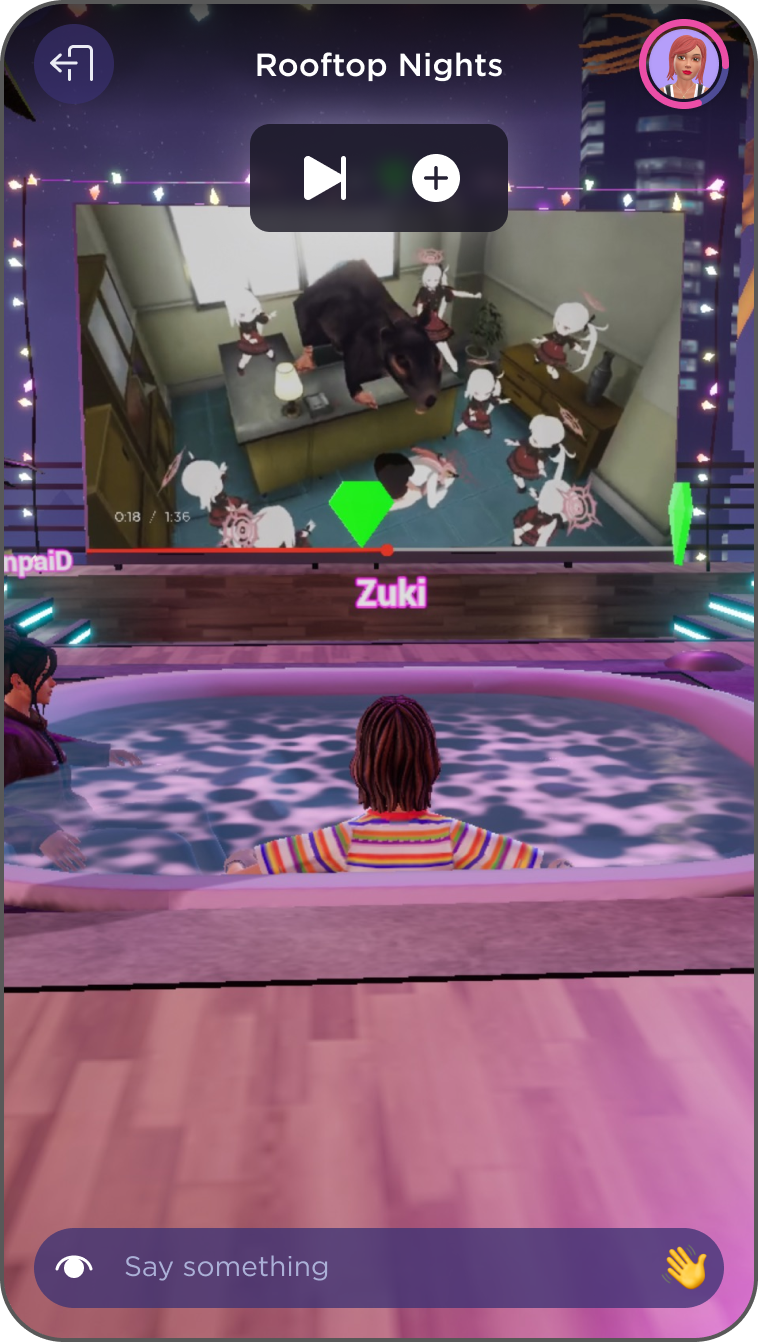
Once you’re in, we make watching together actually feel together. The early “everyone controls YouTube” model caused thrash, so we redesigned it as a YouTube queue with role clarity and fairness: host-led playback when present, democratic FIFO when not, one slot per person, and a vote-to-skip that only counts engaged viewers.
Drawing Together
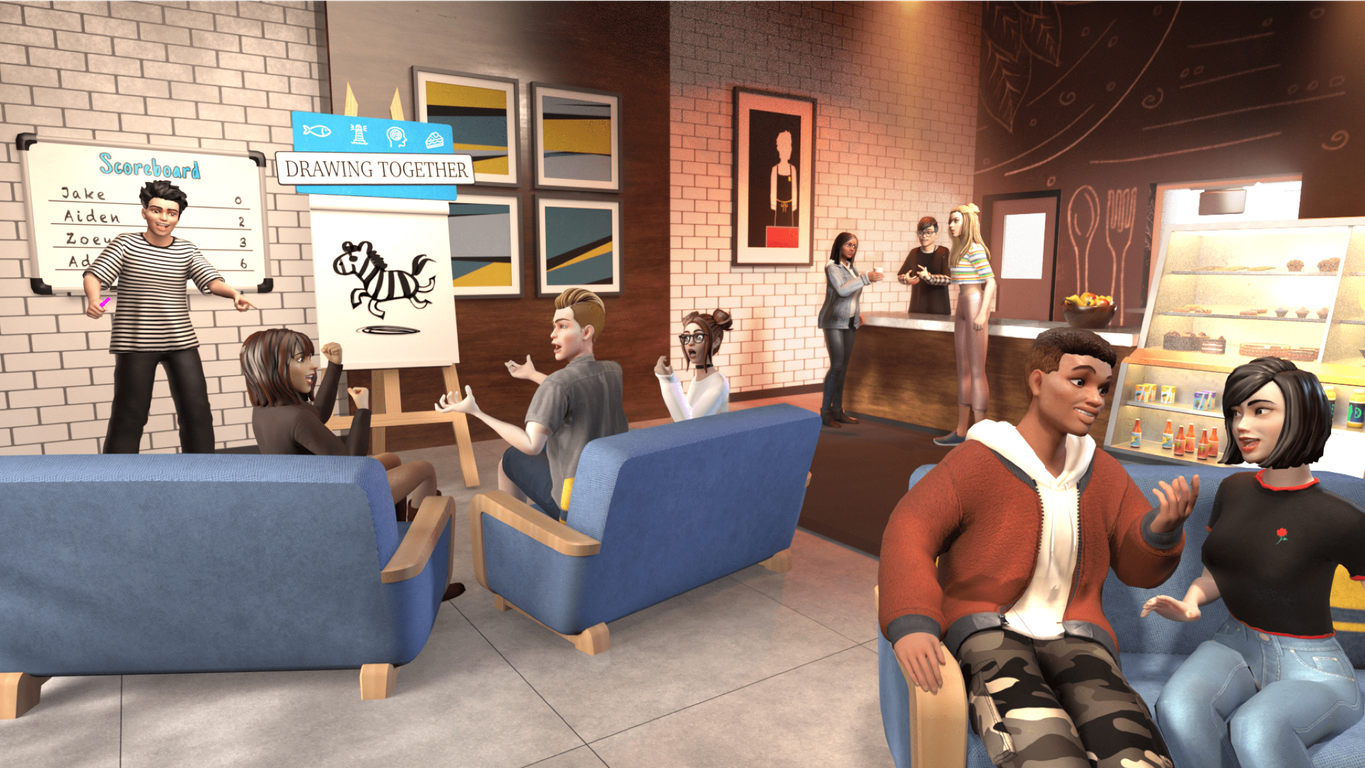
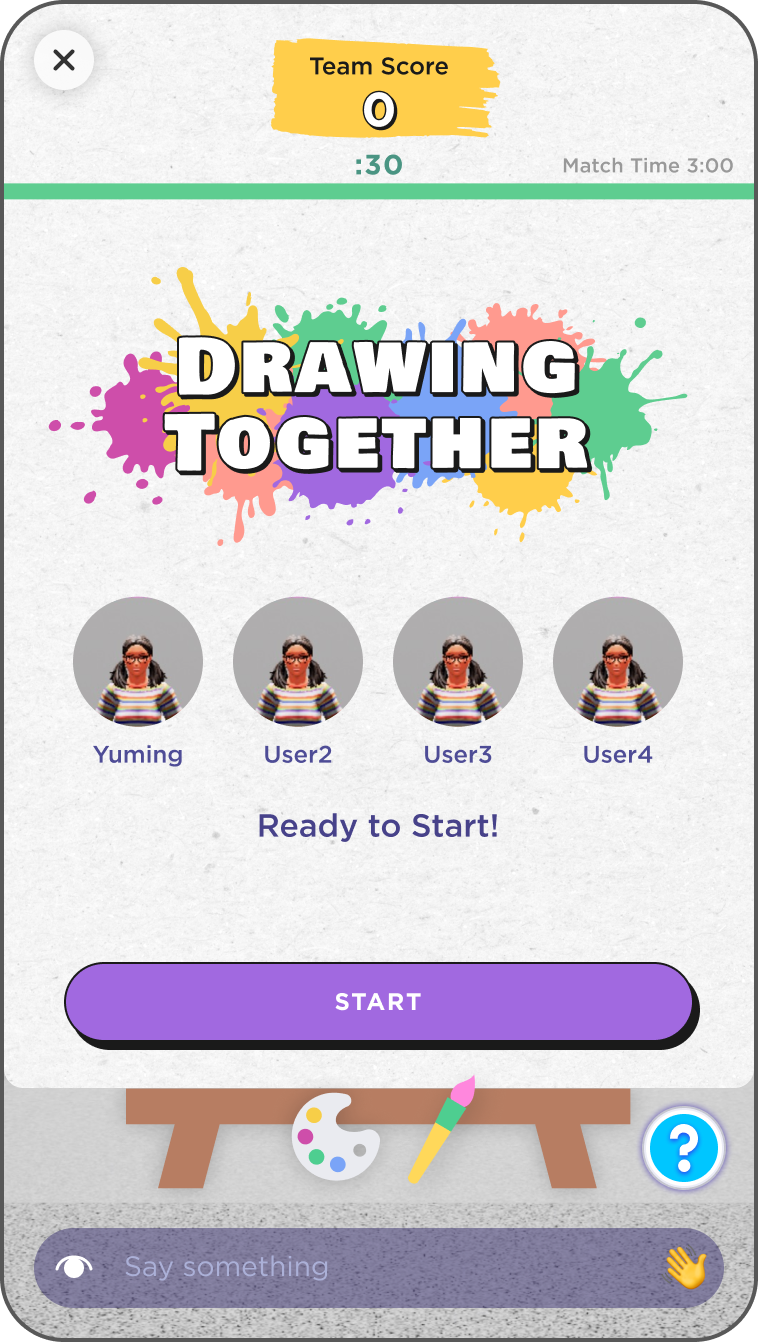
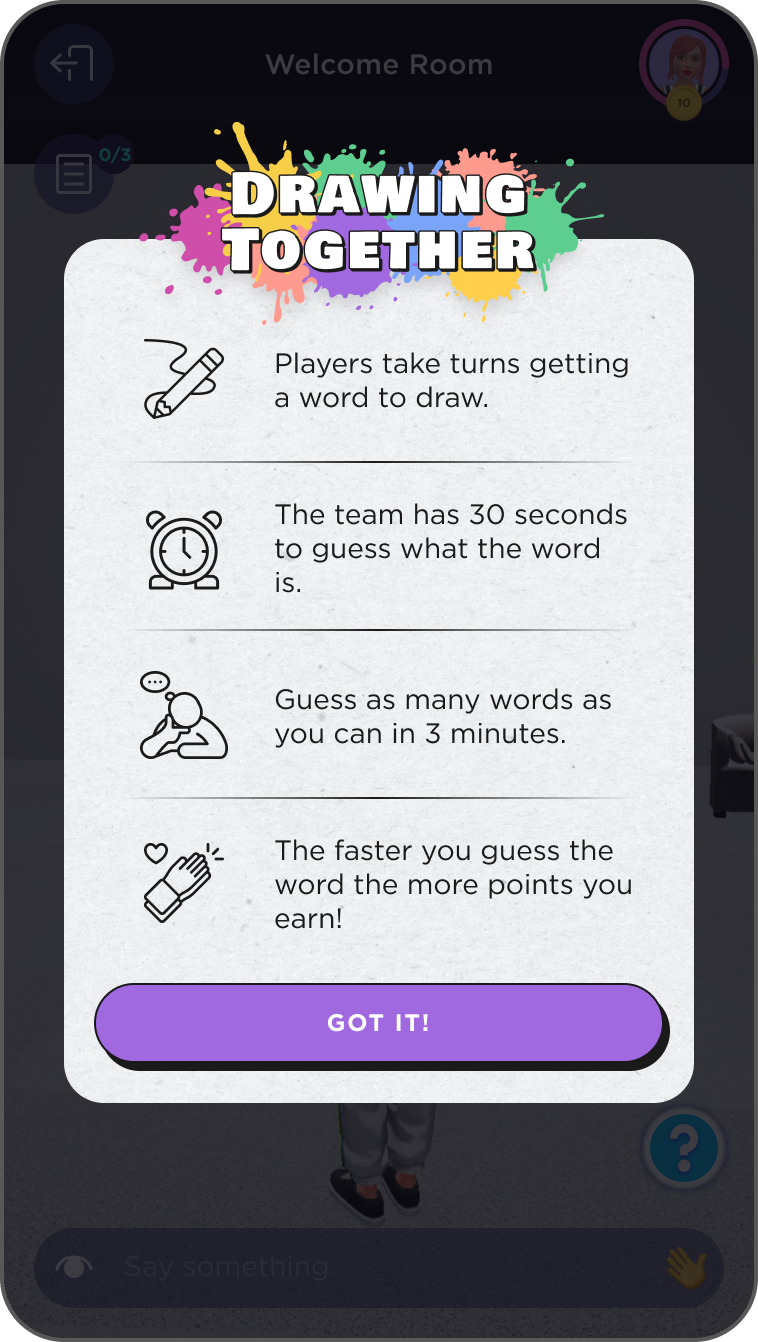
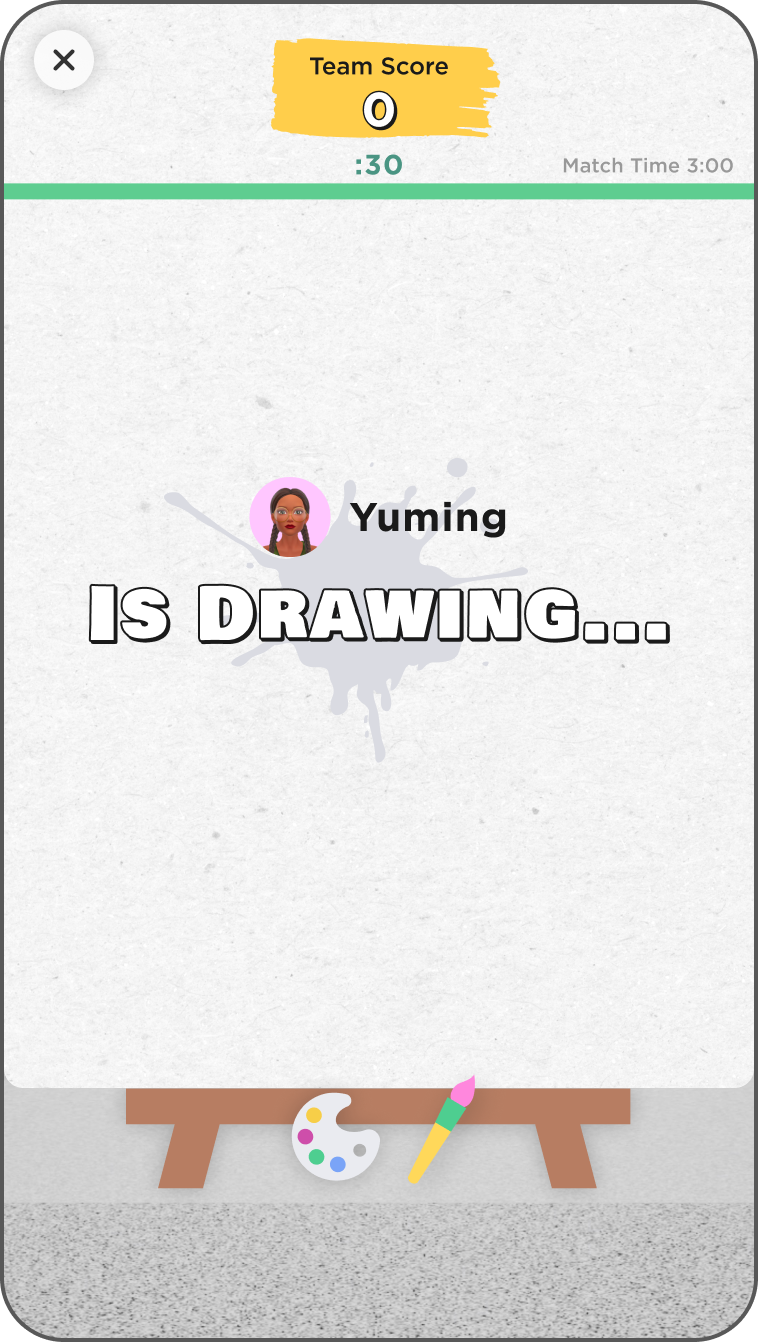
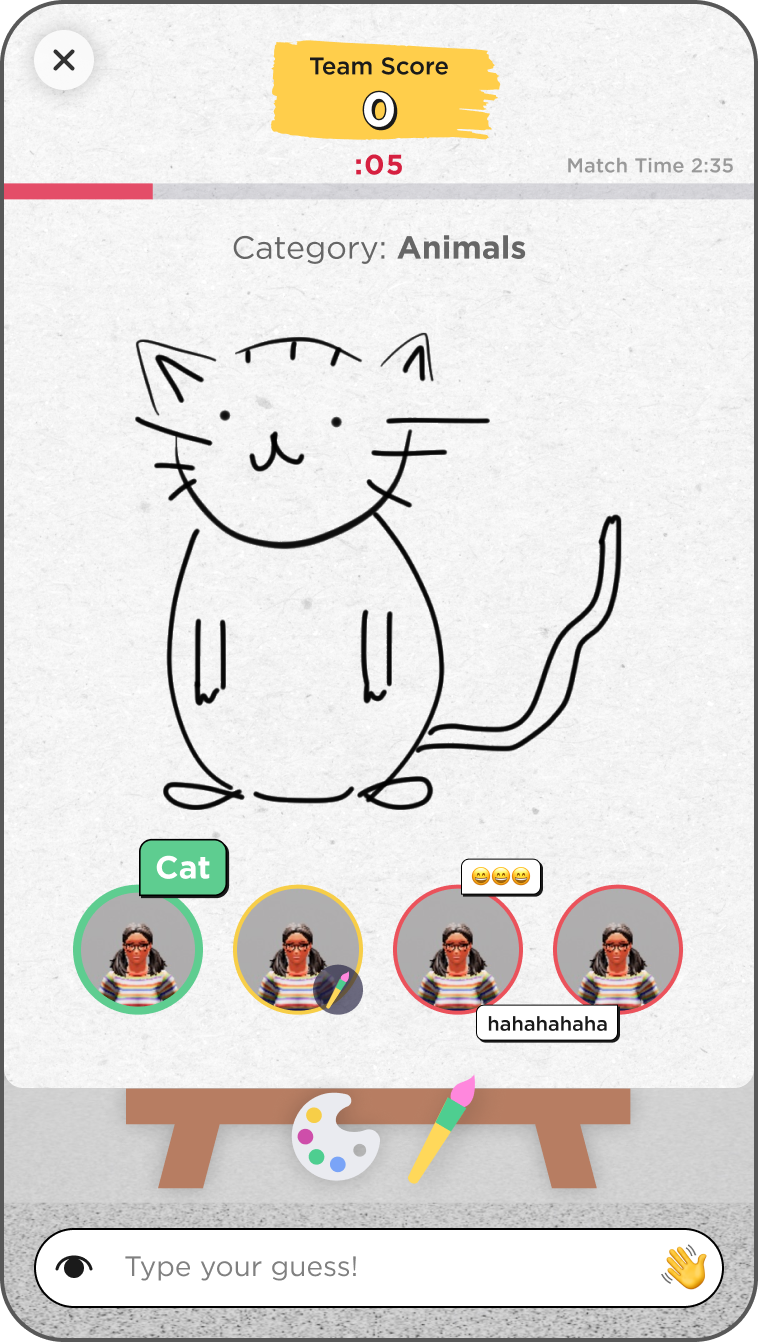
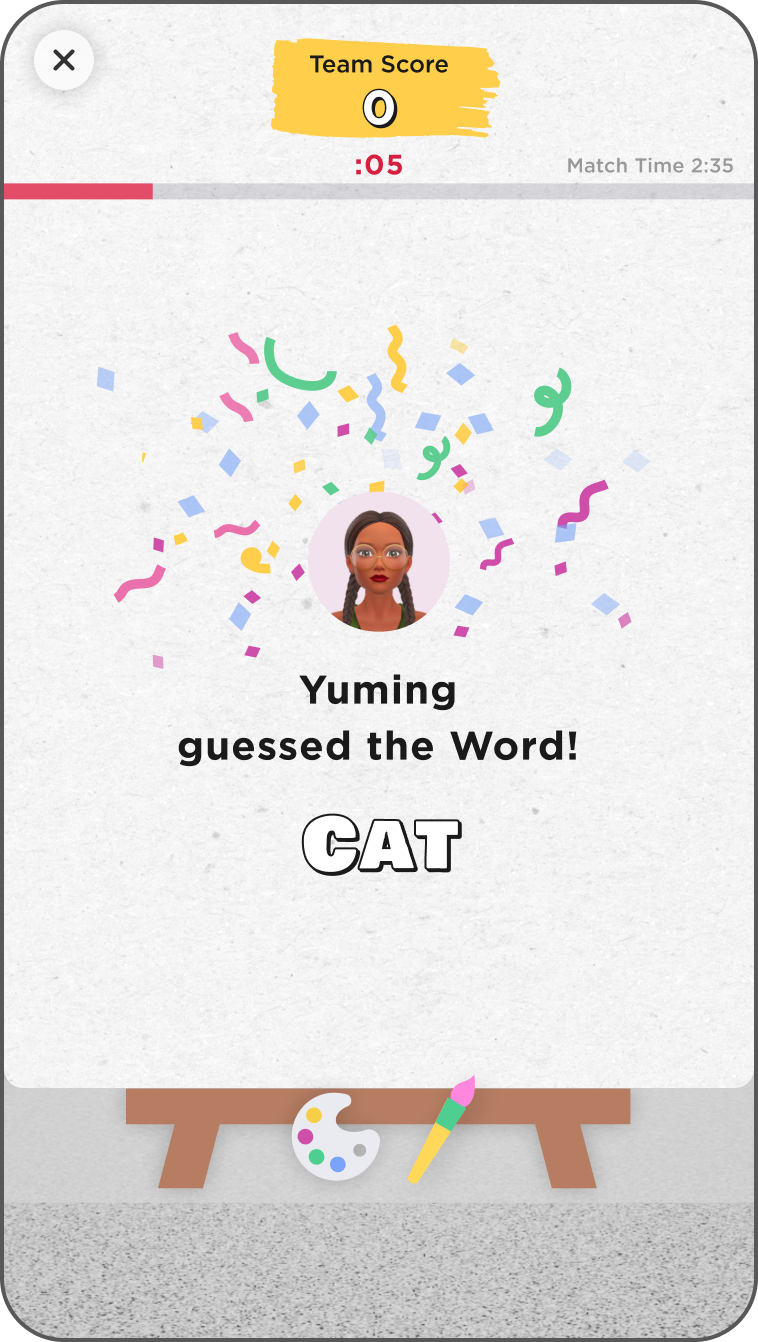
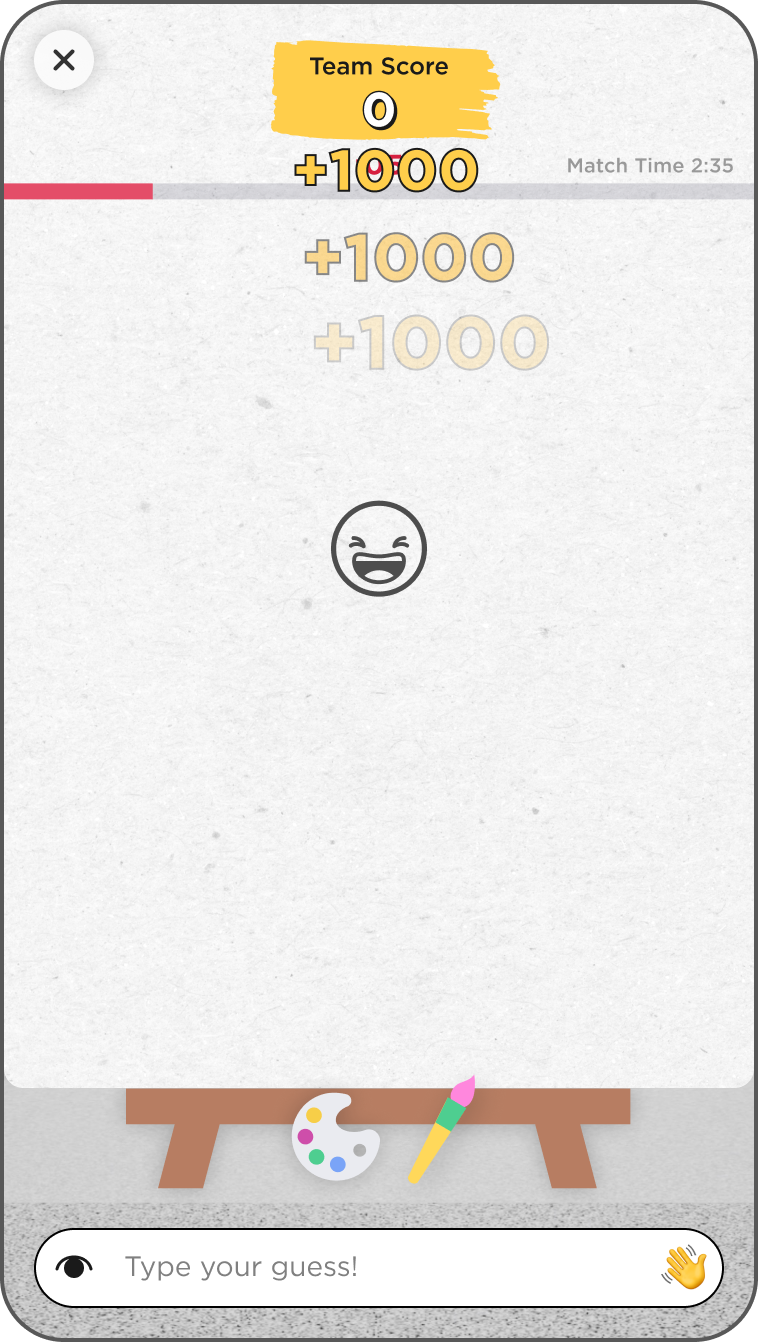
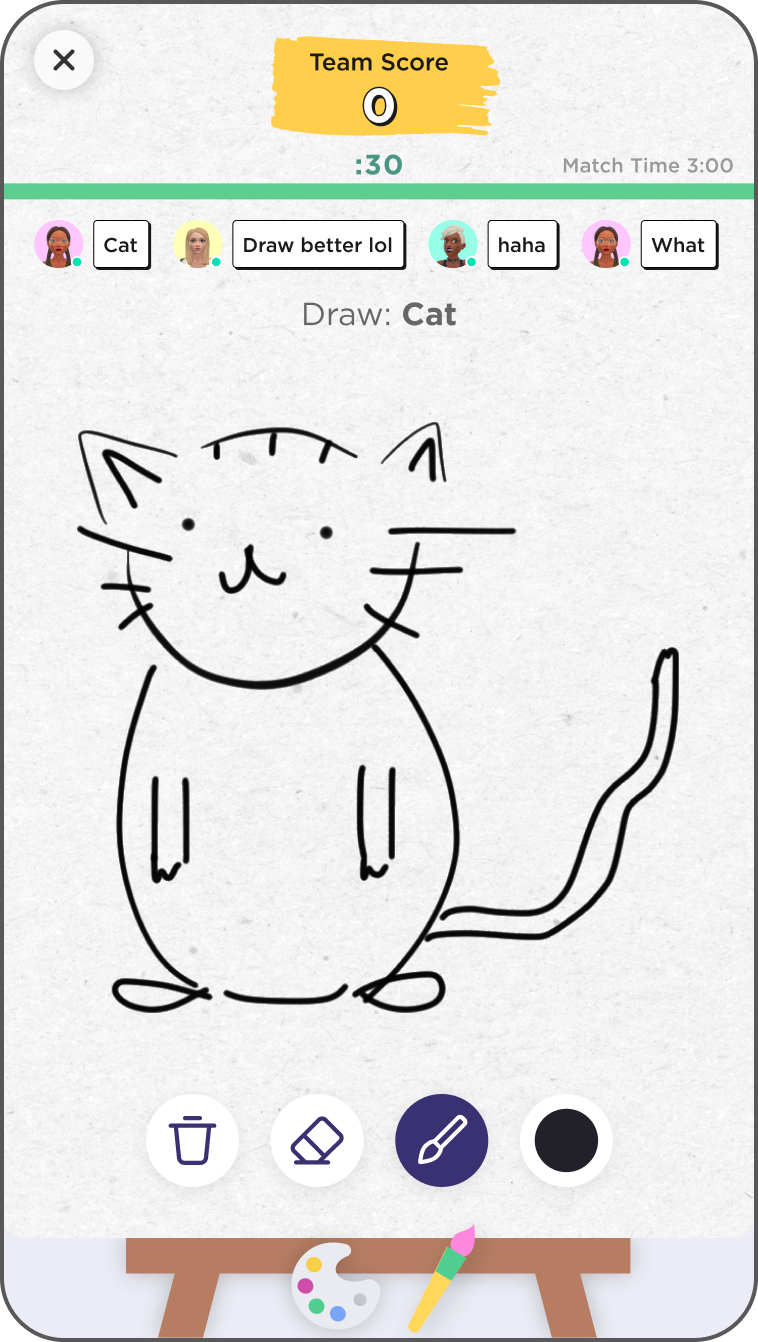
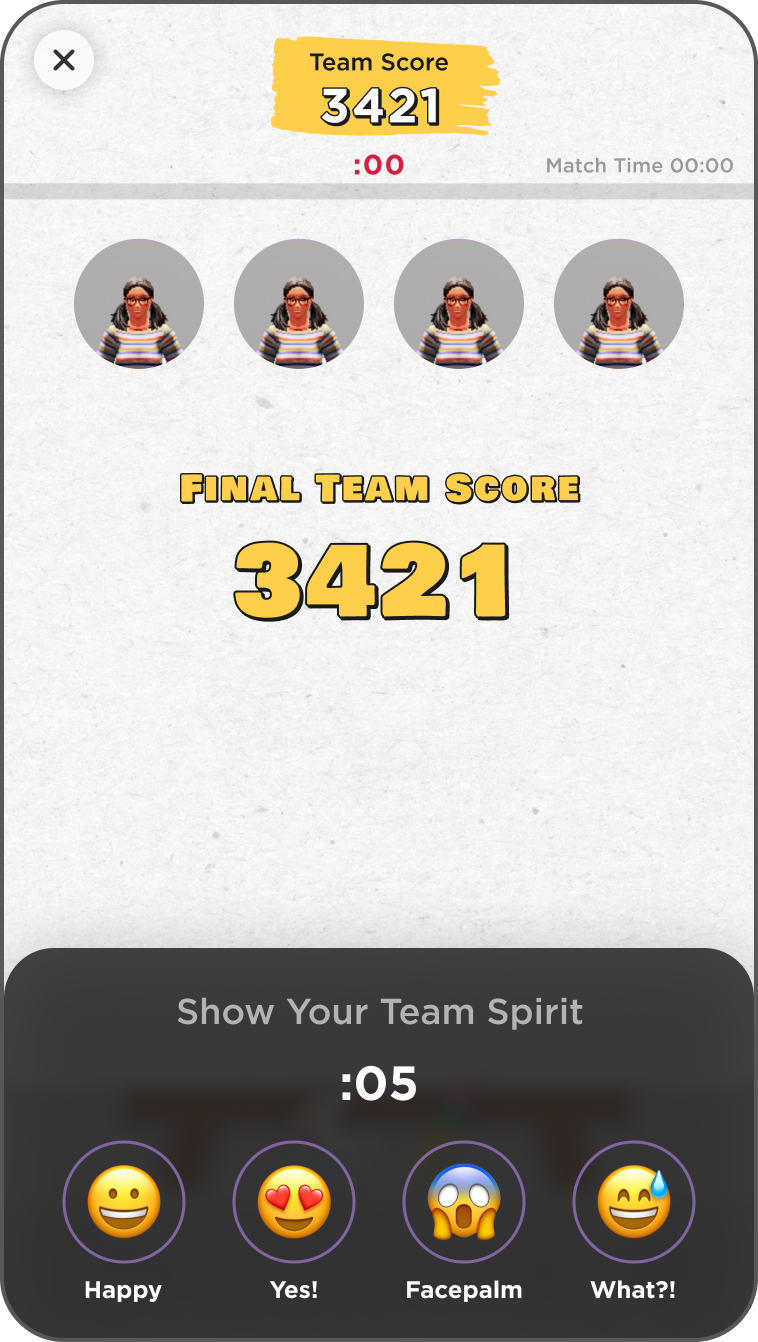
Drawing Together is a canvas-first, 2–4 player Pictionary-style game designed for warm, low-pressure togetherness. Each round follows a simple rhythm—prompt → draw/guess → reveal—with gentle timers to add energy without stress and little celebration beats on the reveal. The goal is social: make it easy to contribute, build camaraderie through teamwork, and turn small wins into real friendship.
Chat Chair
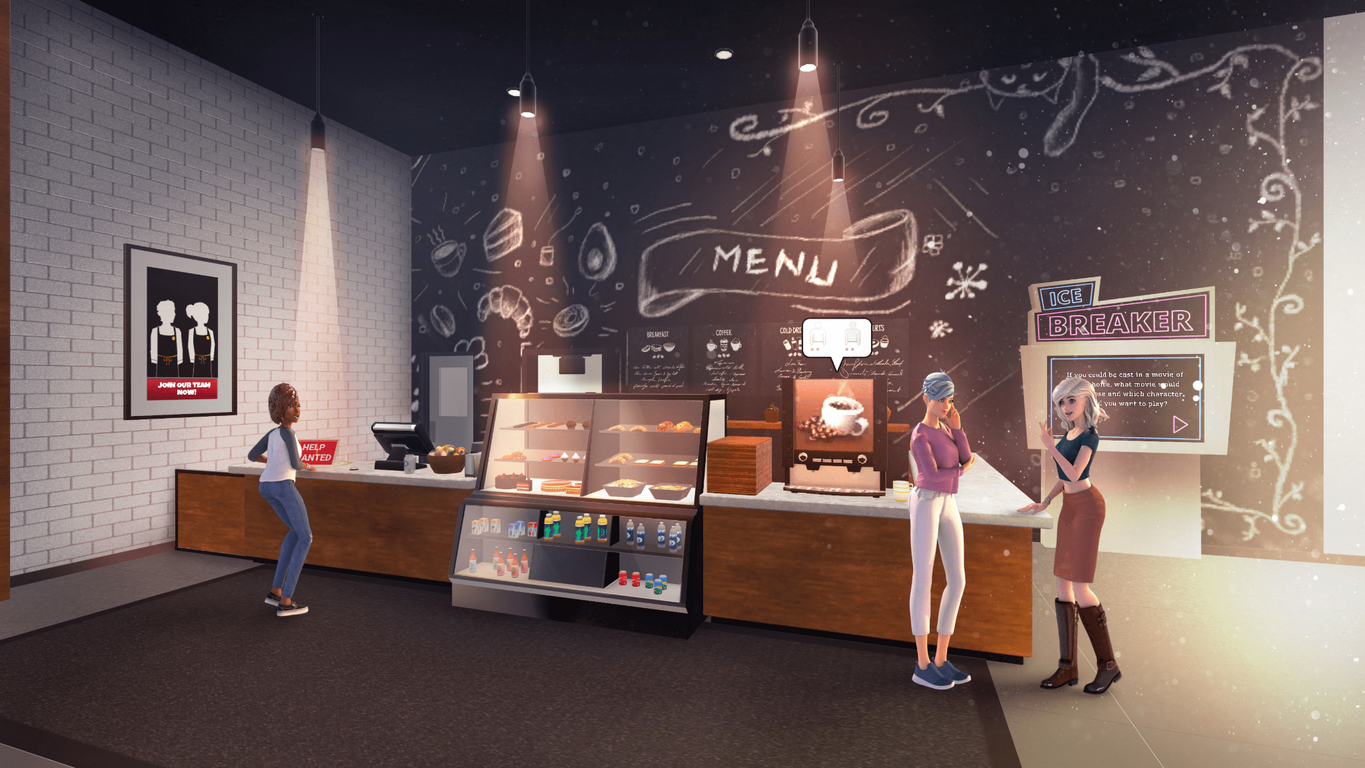
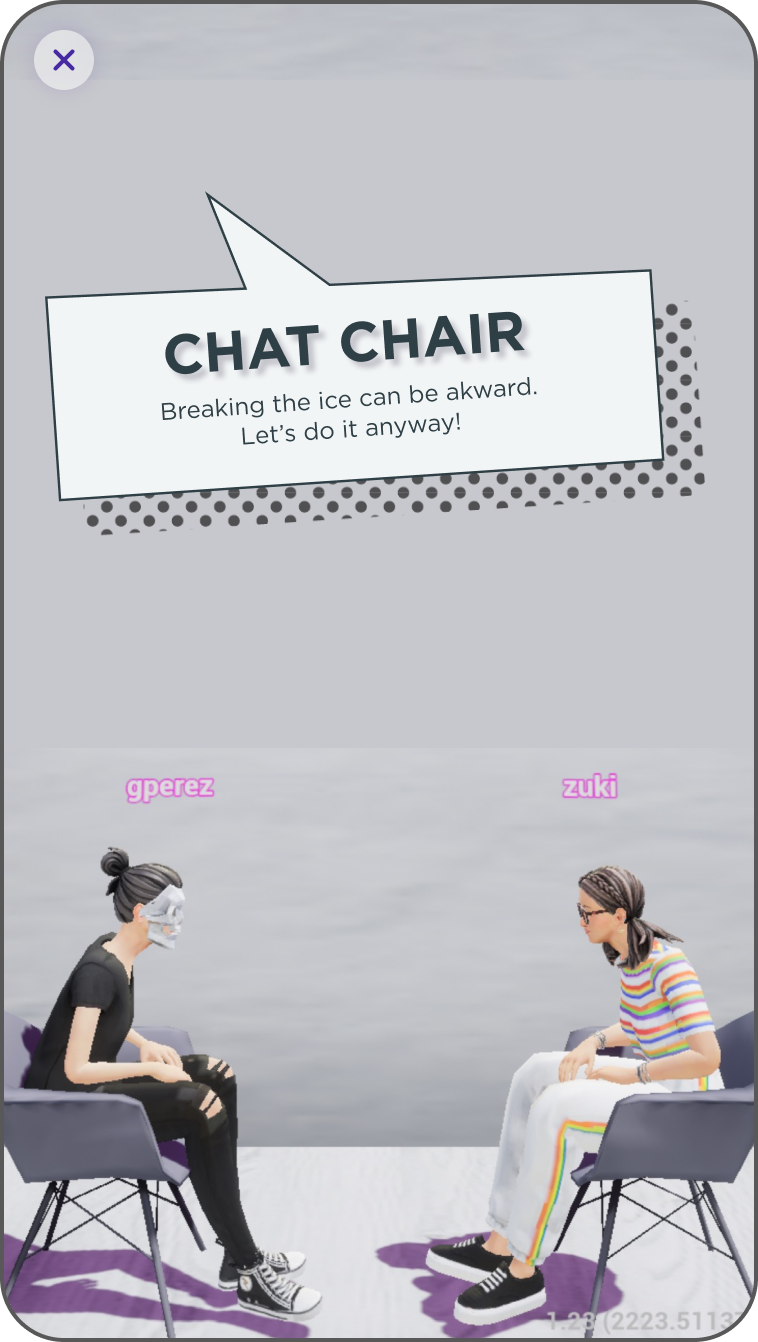
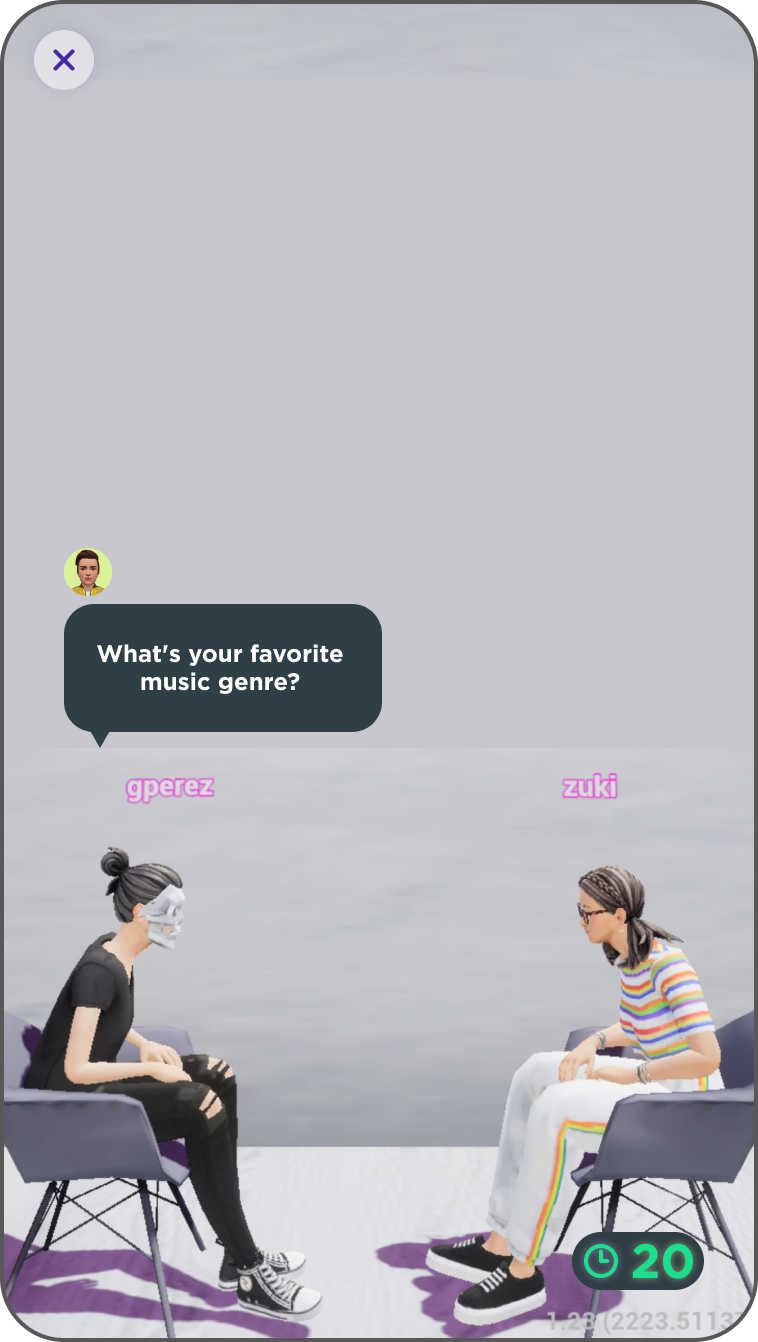
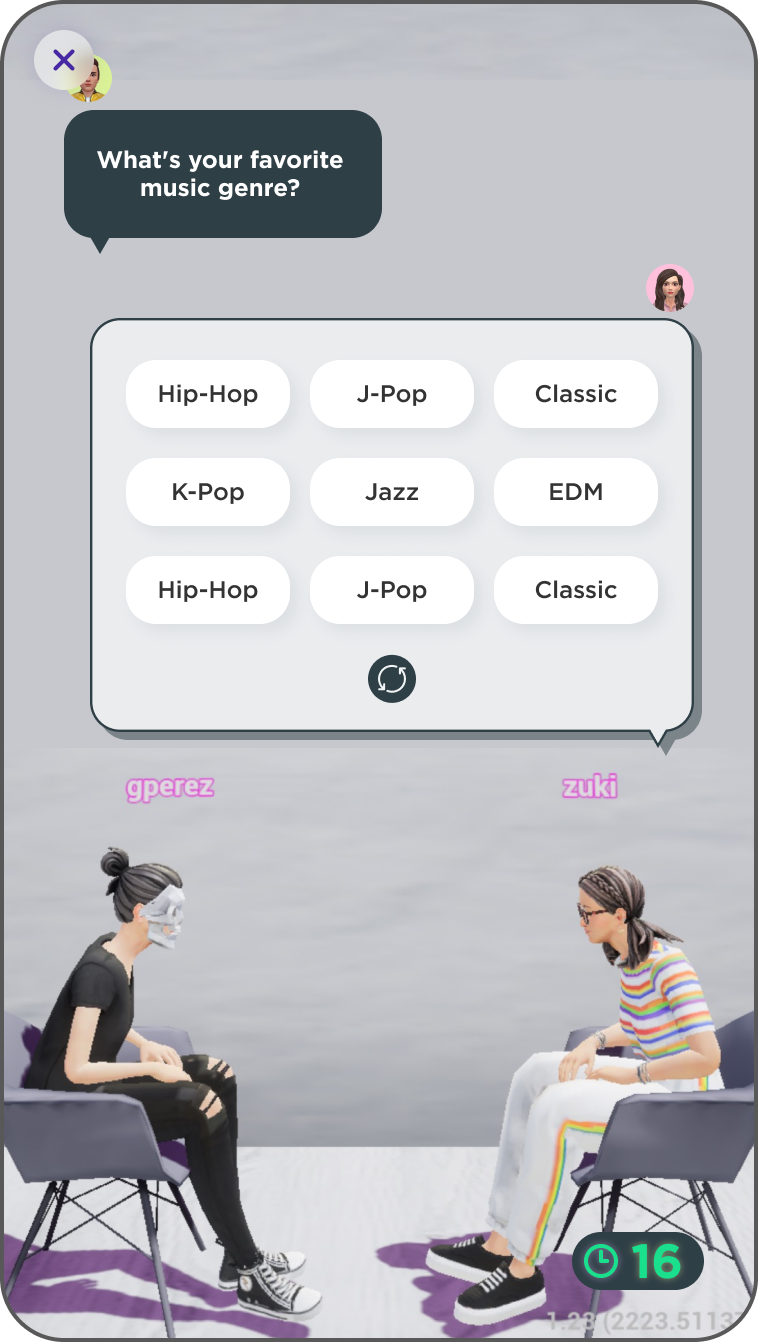
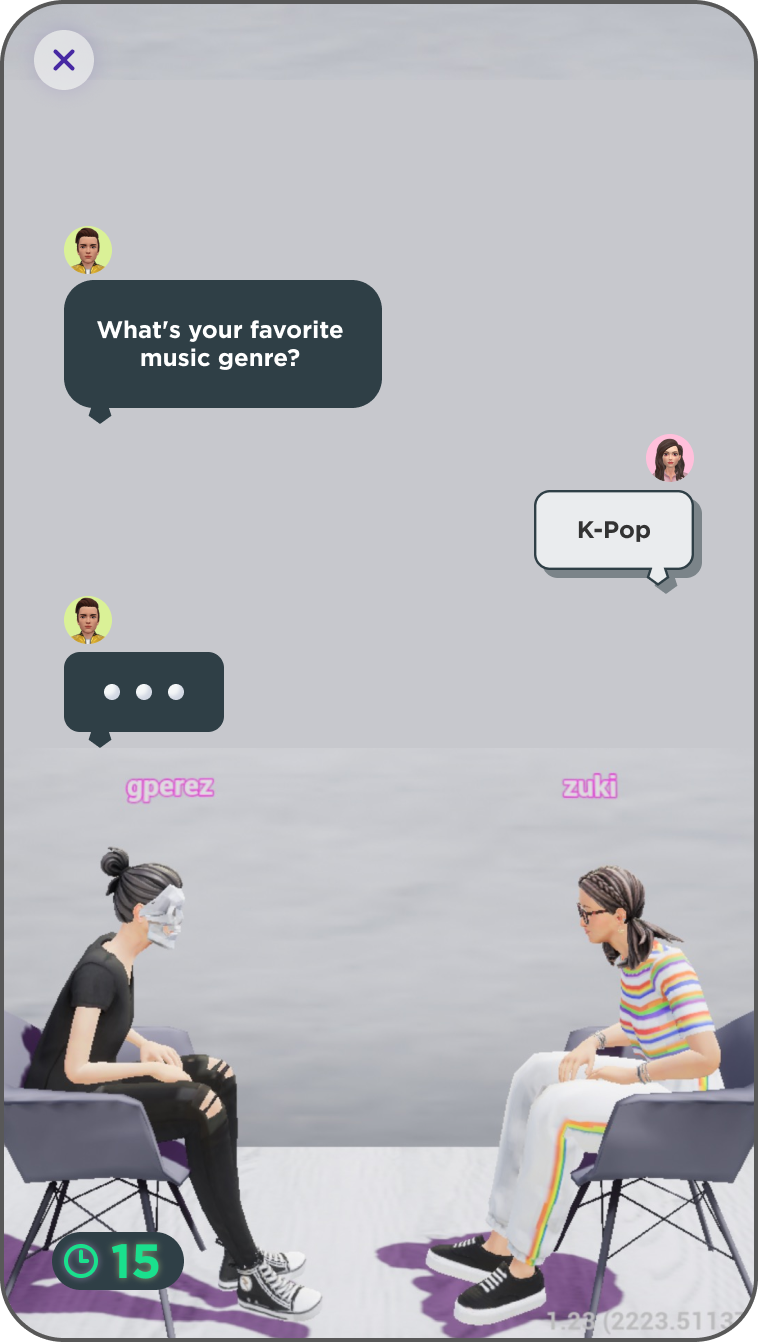
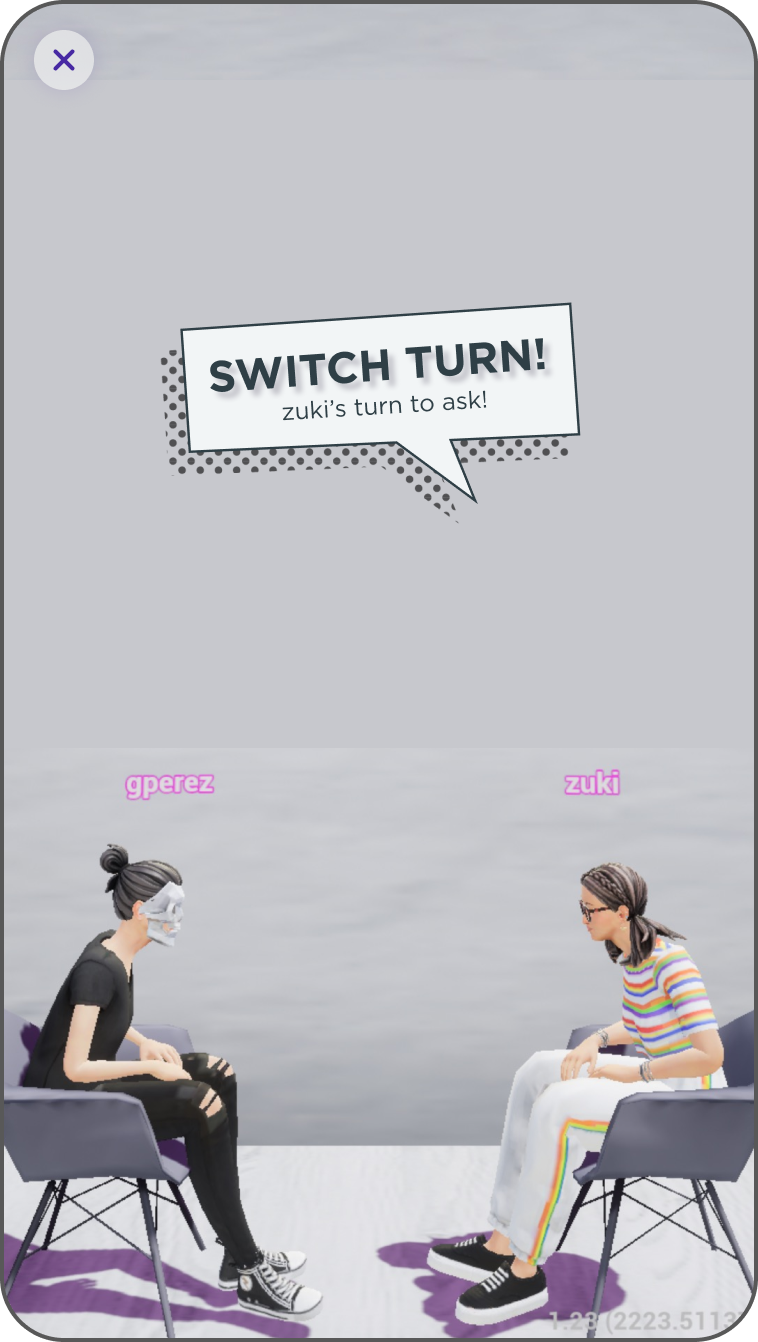
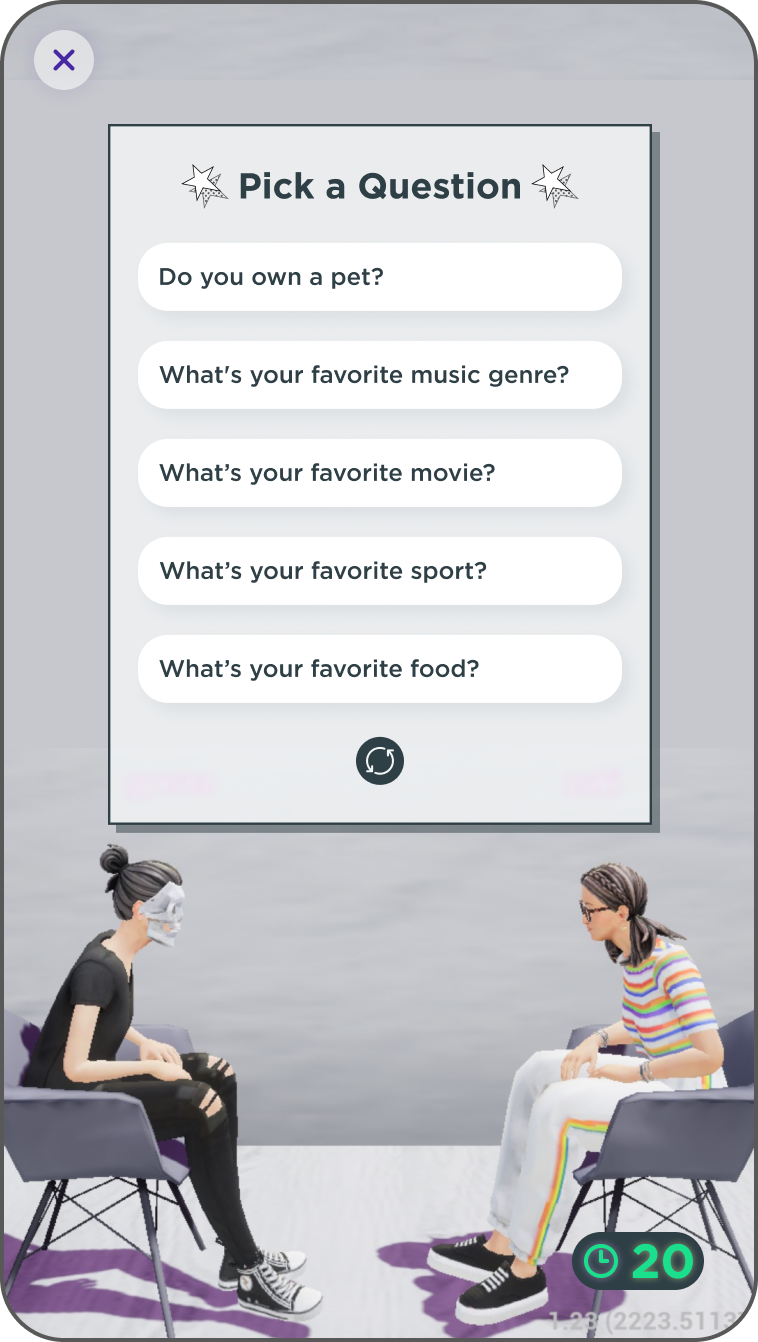
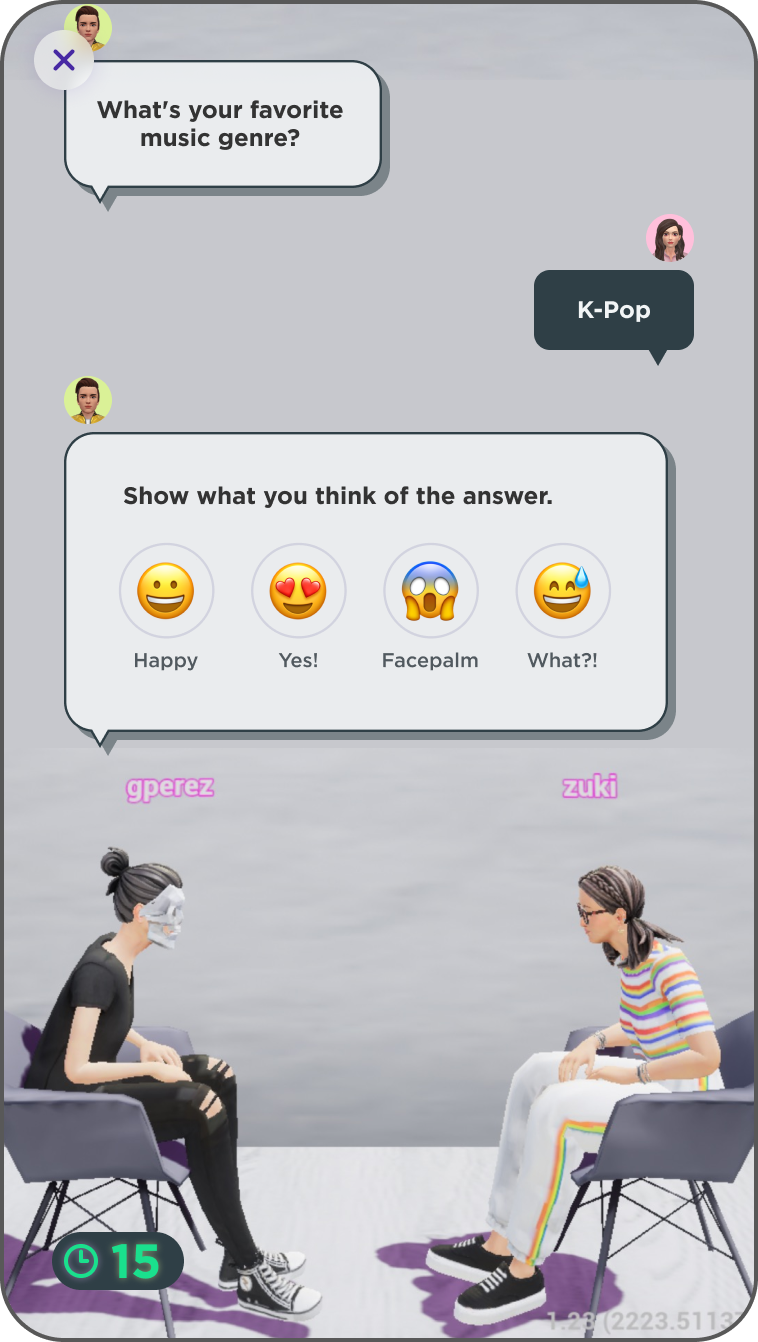
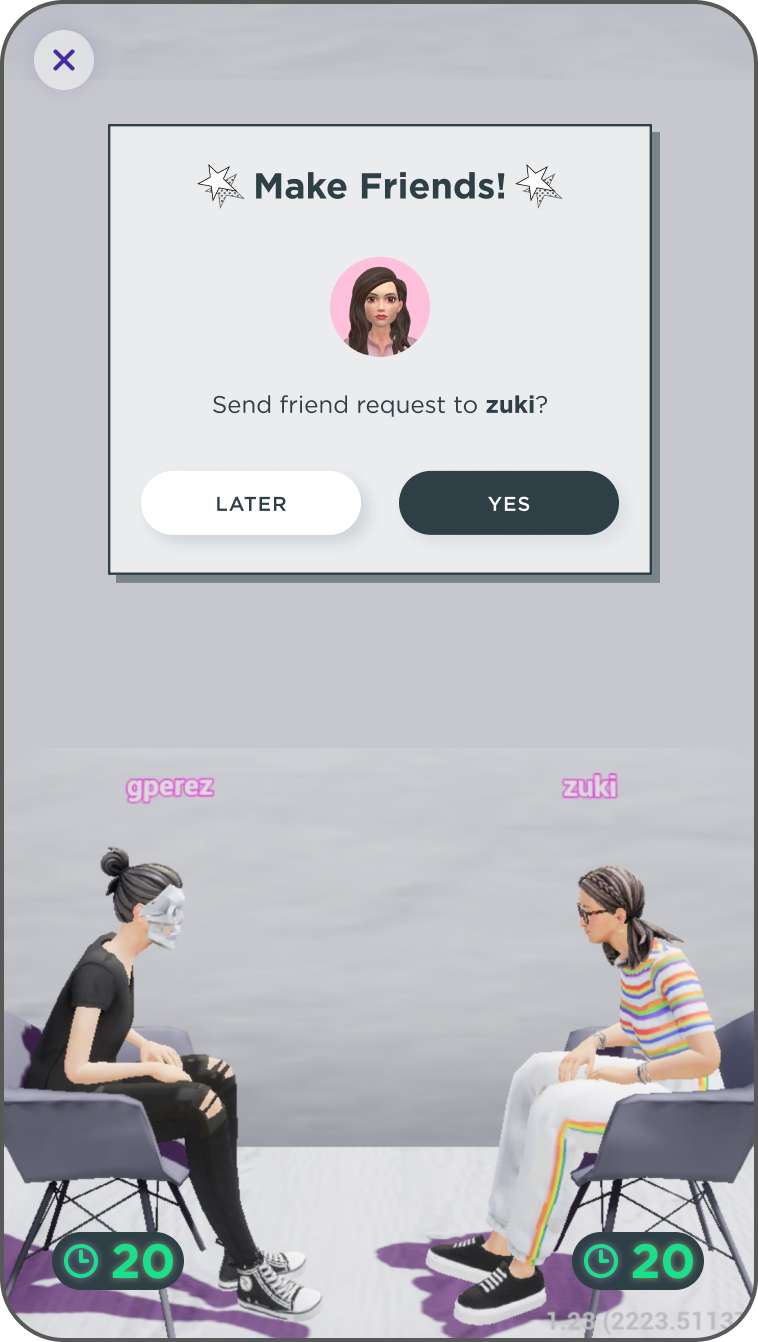
Chat Chair lowers the barrier to meeting someone new. It’s a two-seat ritual for low-pressure 1:1s: when one seat fills, the room gets a friendly invite; four short prompt-and-answer rounds keep things structured and positive—emotes included, with no open text during play to avoid negativity. Chairs are themed (movies, music, etc.) to align interests without extra UI weight. At the end, players can keep chatting and add each other as friends.
Super Trivia
Super Trivia delivered quick, low-friction fun with people you’ve just met: a five-round, snackable session anyone can drop into without cognitive overload. The pre-game is a calm lobby—sit to join, spectators stay read-only to keep the UI clean, and anyone seated can start when the table’s ready.
Each round reveals one thing at a time (question, then four choices) so players never split attention. A 10-second, color-shifting timer (blue→yellow→red) adds urgency and rewards faster answers, while social moments stay lightweight: the correct choice pulses, the board celebrates, and a brief reaction beat invites playful emotes. Final scores trigger a camera-sweep spotlight with titles, then one tap returns everyone to the room to keep momentum.
Group Chat in 3D Rooms
Group chat had to support the room, not interrupt it. On a small mobile screen with a living 3D scene behind it, we adopted an ephemeral overlay: messages fade on their own and tuck away during high-attention moments. To help shy users make the first move, Quick Chat surfaces a small set of curated, context-appropriate prompts right where conversations happen, turning “I don’t know what to say” into a one-tap start.
Under the hood, this model came from competitive research and hands-on testing of fade, hide, and regional behaviors. We tuned it to keep presence and play primary while still making it effortless to talk—light when you’re acting, present when you need it, with report/block close at hand.
From Figma to Unreal: A System, Not a Hand-Off
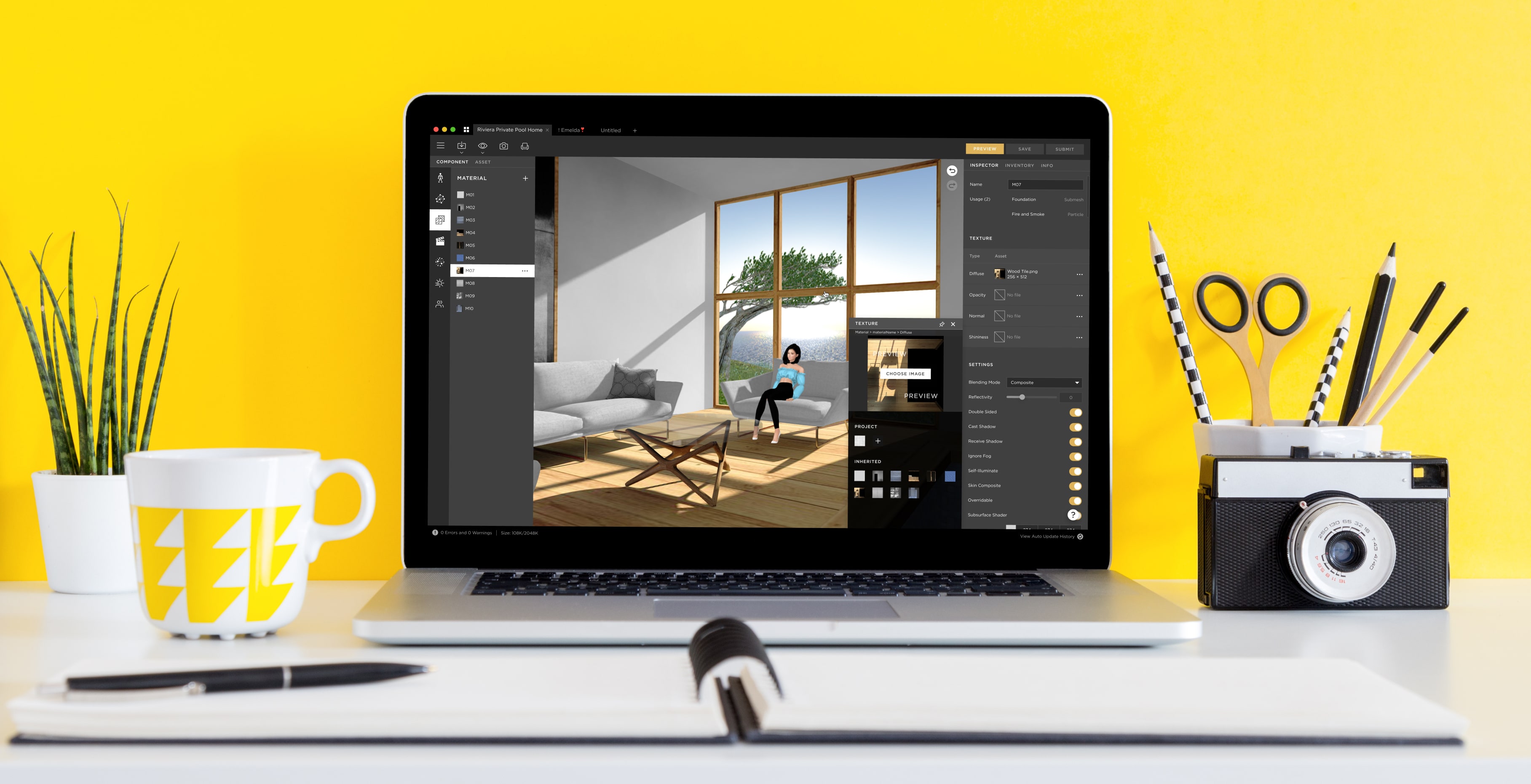
I led the end-to-end translation of our design system from Figma into Unreal—owning the UI implementation strategy, setting quality bars, and unblocking engineering. I defined the UMG/Blueprint architecture, established a responsive widget library, and drove a tintable-texture/material-instance pipeline that let the team change colors in-editor rather than re-exporting assets. I also formalized override patterns in the graph so nested components could safely customize properties. These decisions improved consistency, cut asset bloat, and sped up iteration across teams.
What Happened When We Launched
WithMe’s launch window showed strong traction: average Day-0 playtime ~29 minutes vs a 16-minute goal, CPI ~$0.74, a ~4.4 App Store rating, and 1,000+ Insiders opting in to help grow the community. Early optimization signals were encouraging too: +6% registration completion from moving avatar setup up-front, and a beta iteration credited with +23% D7 retention.
Engagement & Satisfaction
29 min
D0 playtime (goal: 16 min)
4.4
App Store Rating
Acquisition & Community
$0.74
CPI (~40x lower than expected)
1000+
Insiders joined
Conversion & Retention Signals
+6%
Registration completion ((avatar setup moved up-front, A/B)
+23%
D7 retention (directional) after a beta iteration
Intent & Word-of-Mouth Potential
69%
“very/extremely likely” likelihood to download
91%
“very/extremely likely” after 3+ visists
In Their Words
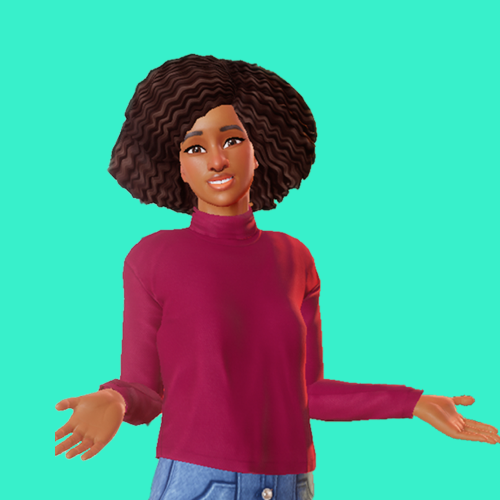
Users echoed our design pillars. They tell us WithMe feels like a welcome break from scrolling—a place to meet, relax, and do things side-by-side with friends. Whether it’s watching together or teaming up in quick activities, the experience “feels like hanging out for real,” and the quotes bring that to life.
What I Learned
Where We Landed
We set out to build a friendship‑first metaverse alongside IMVU. A year after release, WithMe earned strong reviews and high App Store ratings, but we did not achieve sustainable scale. That contrast—users loved the experience; not enough users stuck around—is the core lesson.
What I’d Do to Bend the Curve (If Rebooting):
1. Ship Mobile UGC early
Give users simple tools to make/modify rooms, props, and mini‑games on the phone; seed templates, reward publishing, and feature a “New Today” lane. UGC is the freshness engine that keeps friends returning.
2. Bridge IMVU ↔ WithMe
One-tap deep links from IMVU into live WithMe sessions, plus presence pings, shared reputation, and cross-inventory rewards—more users in the door, more reasons to return.
3. Timing & Engine Switch
The project spanned ~3 years with strong early investment, but our Godot→Unreal migration absorbed the “golden time” of COVID’s gaming climax. We slipped the natural demand surge and shipped into a cooler market, making growth and concurrency harder. Next time I’d preserve a thin, shippable path on the current engine, limit scope to weekly increments, and migrate features behind flags to protect timing.
My Personal Takeaway
I learned Unreal end-to-end and shipped UI/UX directly in 3D—building watch-together, drawing, and mini-game experiences—and applied my architecture background to spatial flow. I also took a brand-new product from 0→soft launch by defining principles, bootstrapping the design system, and partnering across a large cross-functional team. Beyond the learnings, the build left me with good memories of a team stretching together to ship something new.


© 2026 Yuming Zheng · Made with 🍵